Why a Marine Survey for Insurance Protects Your Investment
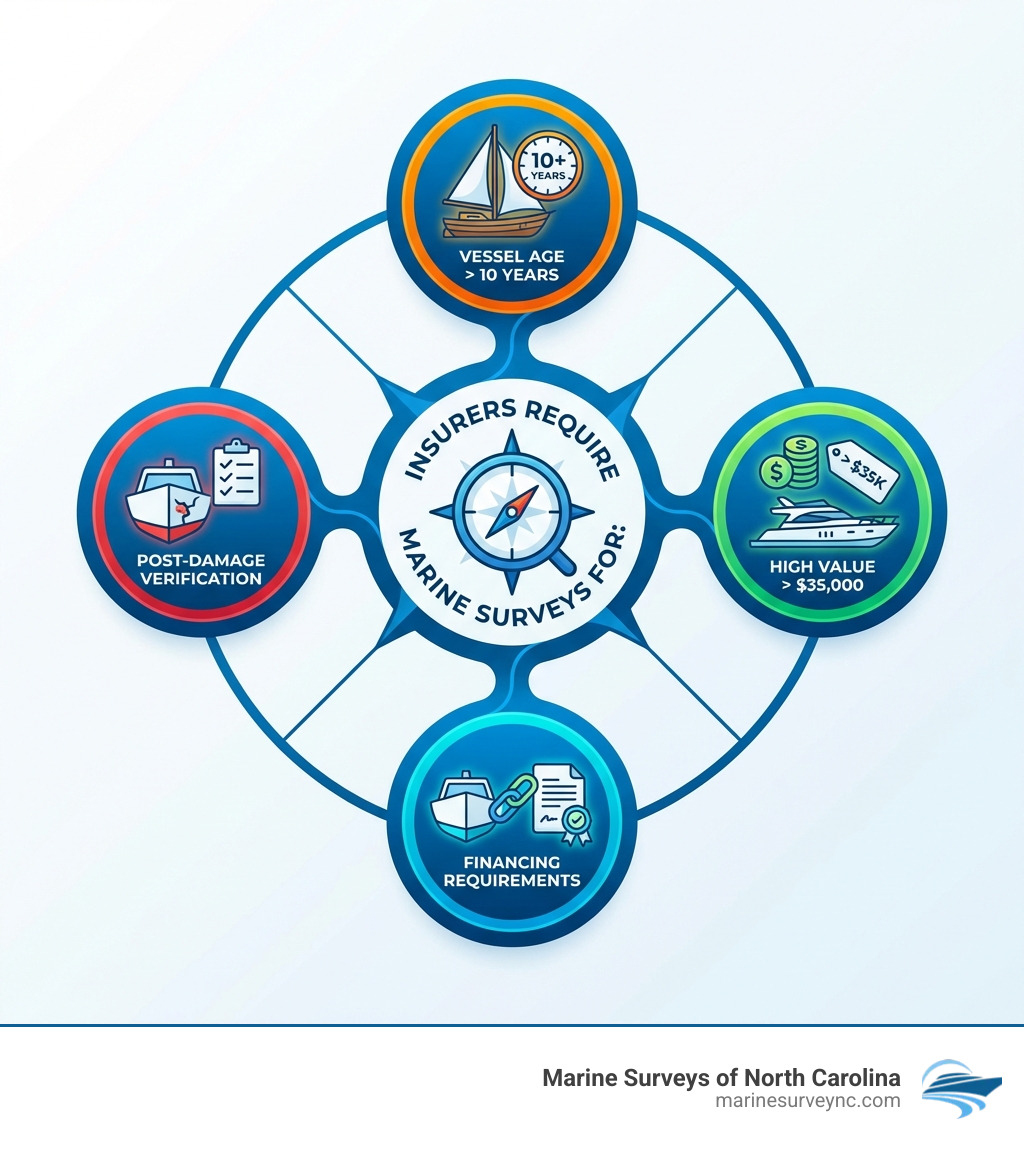
A marine survey for insurance is a comprehensive inspection of your vessel that insurers require to assess risk, verify condition, and establish accurate value before issuing or renewing a policy. Most insurance companies mandate this survey for boats over 10 years old, vessels valued above $35,000, or any watercraft with a history of damage or repairs.
Key Reasons Insurers Require a Marine Survey:
- Risk Assessment – Identify structural issues, mechanical failures, and safety hazards that could lead to claims
- Accurate Valuation – Establish fair market value and replacement cost for coverage amounts
- Compliance Verification – Confirm the vessel meets safety standards and is seaworthy for its intended use
- Underwriting Decisions – Determine insurability, set premiums, and define coverage terms based on documented condition
When You’ll Need One:
- Boats over 10 years old
- Vessels valued over $35,000
- Financing or refinancing requirements
- History of previous damage or claims
- Inconsistencies between requested coverage and market value
Before you purchase boat insurance or attempt to renew an existing policy, understanding what a marine survey entails—and why it matters—can save you from costly surprises and ensure your vessel is properly protected.
The process isn’t just a formality. A thorough marine survey for insurance uncovers hidden defects, establishes a baseline condition for future claims, and gives underwriters the confidence to offer coverage. Without it, you may face policy denial, higher premiums, or coverage gaps that leave you exposed when something goes wrong.
I’m Andrew Gallant, a certified marine surveyor and the principal surveyor at Marine Surveys of North Carolina, accredited as a Surveyor Associate with SAMS® and holding multiple ABYC technical certifications. I’ve conducted hundreds of marine surveys for insurance across North Carolina’s coastal and inland waterways, helping vessel owners secure appropriate coverage while identifying critical issues before they become expensive problems. What follows is a clear explanation of what insurers look for, how the survey process works, and how to steer it successfully.
Why Insurers Mandate a Marine Survey
Insurance companies operate on the principle of risk. When you seek to insure a vessel, they need to understand the potential liabilities involved. A marine survey for insurance serves as a vital tool for risk mitigation, providing underwriters with an objective assessment of your boat’s condition and value. This detailed report helps them make informed underwriting decisions, ensuring that the vessel meets their standards for safety and seaworthiness.
Many insurers specifically require a marine survey for boats over 10 years old or for valuable watercraft, often those exceeding $35,000 in value. This is because older vessels naturally accumulate wear and tear, and higher-value boats represent a greater financial risk. Lenders also often require a survey, especially for used boats, before they will consider financing. This ensures that the asset securing the loan is in sound condition and accurately valued. Without a current and comprehensive survey, obtaining or renewing your boat insurance in North Carolina can be challenging, if not impossible. For more detailed information on how these surveys serve your insurance needs, we invite you to explore our dedicated page on More info about Insurance Surveys.
When is a Marine Survey for Insurance Required?
The circumstances under which a marine survey for insurance becomes mandatory are typically quite clear, though they can vary slightly between insurance providers. Understanding these triggers is essential for any boat owner or prospective buyer in areas like Wilmington, Beaufort, or Lake Norman.
- Vessel Age: One of the most common requirements is tied to the age of the boat. Many insurers mandate a survey for vessels that are 10 years old or older. The rationale is simple: older boats are more likely to have accumulated wear, tear, and potential hidden issues that could lead to future claims. Some companies may even have a lower age threshold, or require periodic surveys (e.g., every 5 years) for older vessels to ensure continuing coverage.
- Vessel Value: High-value vessels, often those exceeding $35,000, typically require a survey regardless of age. The financial exposure for the insurer is greater, necessitating a thorough inspection to confirm the vessel’s condition and market value.
- Vessel Type: Certain vessel types, such as wooden boats or custom-built yachts, may face stricter survey requirements due to their unique construction, maintenance needs, or higher potential for specialized issues.
- Financing Stipulations: If you are financing a used boat, your lender will almost certainly require a marine survey. They need assurance that the collateral for their loan is in good condition and accurately valued. This survey often doubles as the insurance survey.
- History of Damage or Claims: Boats with a reported history of significant damage or previous insurance claims will often trigger a mandatory survey. This allows the insurer to assess the quality of repairs and ensure no lingering issues compromise the vessel’s safety or seaworthiness.
- Inconsistencies in Valuation: If there are discrepancies between the requested insurance value and the vessel’s perceived market value, or if prior reports suggest potential issues, an insurer will likely request a comprehensive survey to clarify the boat’s true condition and worth.
The Role of the Survey in Setting Your Policy
The findings from a marine survey for insurance directly influence several critical aspects of your policy. This is where the objective assessment of a SAMS SA certified marine surveyor becomes invaluable.
- Determining Agreed Value vs. Actual Cash Value: The survey provides a fair market value for your boat, which is crucial for determining whether your policy will be “agreed value” (where the insurer agrees to pay a set amount in the event of a total loss) or “actual cash value” (where depreciation is factored in at the time of loss). An accurate valuation ensures you are adequately covered without overpaying for your premium.
- Identifying Required Repairs for Insurability: The surveyor’s report will detail any deficiencies or safety hazards. The insurer may require that certain critical repairs be completed before they will issue a policy or continue coverage. For example, issues with the fuel system, electrical wiring, or structural integrity are almost always mandatory fixes. These recommendations are not arbitrary; they are designed to bring the vessel up to acceptable safety and construction standards, often referencing guidelines from organizations like the American Boat & Yacht Council (ABYC).
- Setting Premiums Based on Risk: A vessel in excellent condition with well-maintained systems and up-to-date safety equipment will generally present a lower risk to the insurer. This can translate into more favorable premiums. Conversely, a survey revealing numerous deficiencies or deferred maintenance will indicate a higher risk, potentially leading to higher premiums or even a denial of coverage until issues are resolved.
- Establishing a Baseline Condition: The survey report creates a detailed snapshot of your boat’s condition at a specific time. This baseline is incredibly important for future insurance claims. Should your vessel suffer damage, the insurer can refer to the original survey to understand its condition prior to the incident, helping to resolve claims more efficiently and fairly.
The Anatomy of a Marine Survey for Insurance
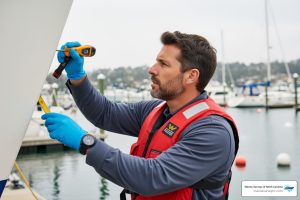
A marine survey for insurance is a meticulous process designed to leave no stone unturned when assessing your vessel. Our approach, whether in Morehead City, New Bern, or the Outer Banks, is methodical and comprehensive. We examine the vessel’s structure, systems, and equipment to determine its overall condition, seaworthiness, and compliance with safety standards. This often involves both an in-water and an out-of-water inspection, requiring the boat to be hauled out for a thorough examination of the hull.
Key areas of inspection typically include:
- Hull Inspection (out-of-water): This is a critical phase where the hull, keels, rudder, and running gear are inspected for damage, delamination, osmosis, corrosion, and proper fit.
- Structural Integrity: We assess the soundness of the vessel’s structure, including bulkheads, stringers, and deck-to-hull joints, looking for signs of stress, fatigue, or previous repairs.
- Propulsion Systems: Engines, transmissions, shafts, propellers, and associated systems are thoroughly checked for operational condition, signs of wear, leaks, and proper installation.
- Electrical Systems: Both AC and DC systems, including wiring, batteries, charging systems, and circuit protection, are inspected for compliance with safety standards and proper function.
- Fuel Systems: Fuel tanks, lines, filters, and ventilation are examined for integrity, leaks, and compliance with safety regulations, a critical area given the risk of fire or explosion.
- Safety Equipment: All required safety gear, such as life jackets, fire extinguishers, flares, and navigation lights, are inventoried and checked for condition and expiration dates.
- Thru-hulls and Seacocks: These critical components, which allow water to pass through the hull, are inspected for corrosion, proper operation, and secure installation to prevent potential flooding.
Our surveys often reference the American Boat & Yacht Council (ABYC) standards. While not legally mandated for recreational vessels, ABYC standards are widely recognized as the industry’s authoritative reference for safe boat design, construction, maintenance, and product performance. Adherence to these standards significantly improves a vessel’s safety and insurability.
What a Typical Marine Survey for Insurance Includes
An insurance survey, often referred to as a Condition and Value (C&V) survey, is specifically custom to meet the needs of insurance underwriters. It is a detailed report that provides an objective assessment of the vessel.
The report will generate detailed information about the vessel, including:
- Vessel Identification (HIN): Clear identification of the vessel, including its Hull Identification Number (HIN), registration numbers, and other unique identifiers. This confirms the vessel’s identity and helps prevent fraud.
- General Condition Assessment: A comprehensive evaluation of the vessel’s overall condition, noting any deficiencies, damages, or areas of concern. This covers the hull, deck, superstructure, interior, and systems.
- Fair Market Value Appraisal: A professional opinion on the vessel’s current fair market value, considering its age, condition, equipment, and current market trends in North Carolina. This helps the insurer determine the appropriate coverage amount.
- Replacement Value Estimate: An estimate of the cost to replace the vessel with a new, comparable model, which can be important for agreed-value policies.
- List of Mandatory Safety Recommendations: Crucially, the survey will outline any immediate safety hazards or deficiencies that must be addressed to make the vessel insurable. These recommendations are prioritized based on their impact on safety and seaworthiness.
While the insurance survey shares similarities with a pre-purchase survey, its primary focus is on what an insurer needs to know to assess risk and value, rather than a prospective buyer’s complete due diligence.
Pre-Purchase vs. Insurance Surveys: Key Differences
It is common for vessel owners and buyers in North Carolina to confuse a pre-purchase survey with a marine survey for insurance. While both involve a thorough inspection, their scope, purpose, and audience differ significantly.
- Scope and Detail: A pre-purchase survey is typically far more exhaustive. Its purpose is to provide the prospective buyer with every detail about the vessel’s condition, seaworthiness, and valuation. This includes a comprehensive check of all systems, cosmetics, and structural components. An insurance survey, while thorough, is often more focused on structural integrity, safety systems, and overall seaworthiness from the insurer’s risk perspective. It may omit non-structural items or very detailed cosmetic observations that a buyer would be concerned with.
- Buyer Focus vs. Insurer Focus: The pre-purchase survey is for the buyer’s protection, helping them make an informed decision and negotiate price. It acts as a detailed inventory and condition report for the buyer. The insurance survey, conversely, is custom for the underwriter, providing the specific information they need to assess risk and determine coverage.
- Comprehensive Systems Check vs. Safety and Structural Focus: A pre-purchase survey digs deep into every system, often including engine oil analysis, extensive sea trials, and detailed operational checks of all electronics. An insurance survey will verify the functionality and safety of critical systems but might not go into the same level of diagnostic detail, especially if a separate engine survey is recommended.
- A pre-purchase survey is more exhaustive for the buyer’s protection: This is the key distinction. A buyer needs to know every potential issue, from minor cosmetic flaws to major mechanical concerns, to properly evaluate their investment. An insurer needs to know if the boat is a safe and acceptable risk.
While a pre-purchase survey often satisfies the requirements for an insurance survey, the reverse is not always true. If you are considering buying a boat in Wilmington, Beaufort, or Morehead City, we highly recommend a full pre-purchase inspection. You can Learn about our Condition and Valuation Survey for boat purchases to understand how this comprehensive service protects your interests.
Navigating the Survey Process: From Selection to Report

Once you understand why a marine survey for insurance is necessary, the next step is to steer the process itself. This involves selecting a qualified surveyor, understanding the costs and duration, and preparing your vessel for inspection. A smooth survey process ensures an accurate report and helps you secure your insurance coverage without unnecessary delays.
How to Find a Qualified Marine Surveyor for Insurance
Finding the right marine surveyor is paramount. The quality of your survey directly impacts your insurance options and your understanding of your vessel’s true condition. In North Carolina, we emphasize the importance of choosing a surveyor with verifiable credentials and a reputation for thoroughness and impartiality.
- Professional Organizations: The most reliable way to find a qualified marine surveyor is through professional organizations that uphold strict standards for their members. The two predominant organizations in the United States are the Society of Accredited Marine Surveyors (SAMS) and the National Association of Marine Surveyors (NAMS). Membership in these organizations signifies a commitment to ethical practice, ongoing education, and professional competency.
- Surveyor Credentials: Always verify a surveyor’s specific credentials. At Marine Surveys of North Carolina, for instance, we are SAMS SA (Surveyor Associate) accredited, which means we adhere to SAMS’s rigorous standards and code of ethics. Look for surveyors with relevant certifications and experience with your vessel type (e.g., power vessels, recreational vessels).
- Avoiding Conflicts of Interest: It is crucial that your surveyor is an independent third party, not affiliated with the seller, broker, or marina. This ensures an unbiased assessment of the vessel. We pride ourselves on our impartiality, working solely for the client to provide an objective report.
- Local Reputation: While professional accreditations are key, a surveyor’s local reputation in areas like Wilmington, Beaufort, New Bern, Morehead City, or Lake Norman can also provide valuable insight. Ask for recommendations, but always cross-reference with professional directories.
The cost of a marine survey typically ranges from $20 to $25 per foot of the vessel, though this can vary based on the boat’s age, construction type, and the specific type of survey required. The duration of a survey can range from a few hours for a smaller boat to a full day or even several days for larger or more complex vessels. Generally, the owner or buyer is responsible for the cost of the marine survey, even if it’s required by the insurance company or lender. It is an investment in protecting your asset and ensuring its insurability.
Your Responsibilities as the Vessel Owner
As the vessel owner, your cooperation and preparation are crucial for a smooth and efficient survey. A well-prepared vessel allows the surveyor to conduct a more thorough inspection, potentially saving you time and additional expense.
- Presenting a Clean Vessel: Ensure your boat is clean and orderly. This means clearing out lockers, storage areas, and the cabin of miscellaneous gear. A clean vessel indicates good maintenance and allows the surveyor unobstructed access to all areas.
- Ensuring Access to All Areas: Make sure all compartments, bilges, engine rooms, and storage spaces are accessible. This might involve moving cushions, removing floorboards, or opening hatches. If areas are inaccessible, the surveyor must note this as a limitation in the report, which could impact the insurer’s assessment.
- Arranging for Haul-Out: For an out-of-water hull inspection, you will need to arrange for the vessel to be hauled out at a suitable facility in your North Carolina location. This is a non-negotiable part of most insurance surveys.
- Having Ship’s Papers Available: Gather all relevant documentation, including the vessel’s registration or title, previous maintenance records, service logs, and any repair invoices. This information provides valuable context for the surveyor.
- The Surveyor Works for You: Once retained, the marine surveyor works exclusively for you. Our role is to protect your interests by providing an unbiased, factual report on the vessel’s condition. While we provide the report to the insurer at your request, our primary allegiance is to you, the client.
The Survey Aftermath: Interpreting Findings and Next Steps
Once the physical inspection is complete, the surveyor compiles a detailed report. This document is the cornerstone of your marine survey for insurance, outlining findings, recommendations, and the vessel’s overall condition and value. Understanding how to interpret this report and what steps to take next is crucial for securing your insurance.
The survey report will typically be a professional, concise document, often utilizing a combination of a structured form and narrative descriptions. It will clearly distinguish between recommendations and requirements. Recommendations are suggestions for maintenance or upgrades that would improve the vessel’s condition or safety, while requirements are critical deficiencies that must be addressed to meet insurance standards.
A typical marine survey for insurance report is generally considered valid for two years by most insurers, provided no significant changes or damage have occurred to the vessel. However, this can vary, and it’s always best to confirm with your specific insurance provider.
Not every vessel will meet insurance or safety standards, and not every buyer is prepared for what a thorough survey may uncover. Our commitment is to provide a clear and objective assessment, enabling you to make informed decisions about your vessel and its insurability.
What Happens if the Marine Survey for Insurance Reveals Problems?
It’s not uncommon for a marine survey, especially on an older or used vessel, to uncover issues. The key is how you address them.
- Prioritized List of Findings: The report will provide a prioritized list of findings, categorizing them by severity. Critical safety issues, such as fuel leaks or compromised structural elements, will be highlighted as immediate concerns.
- Mandatory Repairs for Coverage: For any critical deficiencies, your insurance company will likely make coverage conditional upon these repairs being completed. They will typically require proof, such as receipts and photographs, that the work has been done by qualified professionals.
- Negotiating Repairs with Seller: If you are in the process of purchasing a boat, survey findings can be a powerful tool for negotiation. You may request the seller to cover the cost of repairs, reduce the selling price, or address the issues before closing.
- Submitting Proof of Compliance to the Insurer: Once repairs are made, you will need to submit documentation to your insurer. Sometimes, a follow-up inspection by the original surveyor or another qualified professional may be required to verify the repairs.
- Potential for Policy Denial: In rare cases, if a vessel has extensive, costly, or unresolvable issues that pose an unacceptable risk, the insurer may deny coverage, even after a survey. This underscores the importance of the survey process in preventing significant financial exposure.
A marine survey for insurance is designed to uncover underlying issues and determine what upgrades or repairs are needed to bring the vessel into a safe operating condition. This proactive approach protects both you and your insurer.
How a Survey Assists with Future Insurance Claims
Beyond securing your initial policy, a comprehensive marine survey for insurance serves as a critical document if you ever need to file a claim.
- Establishes Pre-Loss Condition: The detailed descriptions and photographs within the survey report provide a clear record of your vessel’s condition before any damage occurred. This helps the insurer accurately assess the extent of new damage and differentiate it from pre-existing issues.
- Provides Detailed Equipment Inventory: The survey often includes an inventory of valuable equipment and systems on board. This can be invaluable in substantiating claims for lost or damaged gear.
- Acts as Crucial Evidence in a Damage Claim: In the unfortunate event of an accident, a survey report serves as objective evidence for your insurance company. It can expedite the claims process by providing adjusters with a clear understanding of the vessel’s specifications and previous condition. This is particularly important for damage sustained from incidents like storms or collisions, where the cause and extent of damage need to be carefully documented.
Should your vessel experience damage in North Carolina waters, a damage survey becomes the next critical step. This specialized survey assesses the nature, cause, and extent of the damage, and can also provide an estimate for repairs. Having a pre-existing insurance survey can make the damage claim process smoother and more transparent. For more information on this vital service, please refer to our page on Read about Damage Surveys.
Conclusion
Understanding the necessity and intricacies of a marine survey for insurance is an indispensable part of responsible boat ownership in North Carolina. It is not merely a bureaucratic hurdle, but a fundamental tool for risk management, ensuring your vessel is safe, seaworthy, and appropriately valued. By engaging a qualified, SAMS SA certified marine surveyor like those at Marine Surveys of North Carolina, you gain an unbiased, expert assessment that protects your investment and provides peace of mind.
Our commitment is to deliver detailed, objective reports that meet the stringent requirements of insurance providers and lenders, whether you’re purchasing a new vessel, renewing an old policy, or navigating a claim. We pride ourselves on our meticulous approach, from the initial inspection in Wilmington to the final report for a yacht in Lake Norman. To ensure your vessel meets the necessary standards and to protect your investment, it is crucial to engage a qualified professional.
We invite you to Review our process for conducting comprehensive marine surveys in New Bern and surrounding areas and learn how our expertise can support your boating endeavors.