Why a Boat Inspection Before Buying is Your First Line of Defense
Boat inspection before buying is the critical step that separates a confident purchase from a costly mistake. Whether you’re buying from a private seller or a broker, a thorough inspection protects your investment and ensures you understand exactly what you’re getting.
Quick Answer: Essential Boat Inspection Steps Before Buying
- Verify the Hull Identification Number (HIN) and check for theft or salvage history
- Inspect the hull exterior for cracks, blisters, repairs, and transom integrity
- Check the deck for soft spots, delamination, and proper hardware installation
- Examine the engine for leaks, rust, milky oil, and maintenance history
- Test all systems including electrical, plumbing, electronics, and safety equipment
- For sailboats, inspect rigging, mast, sails, keel, and rudder condition
- Hire a professional marine surveyor accredited by SAMS or NAMS for a comprehensive assessment
- Verify clean title and check for liens through appropriate agencies
- Conduct a thorough sea trial to assess performance and handling
- Review survey findings and negotiate or walk away based on major issues
Purchasing a boat from a private party is almost always a “buyer beware” situation. As one industry expert notes, you want to make certain you are not purchasing a boat that’s going to come with a lot of problems, or is even unsafe. The used boat market represents roughly 80% of all boats for sale, and without proper inspection, you’re gambling with a substantial investment.
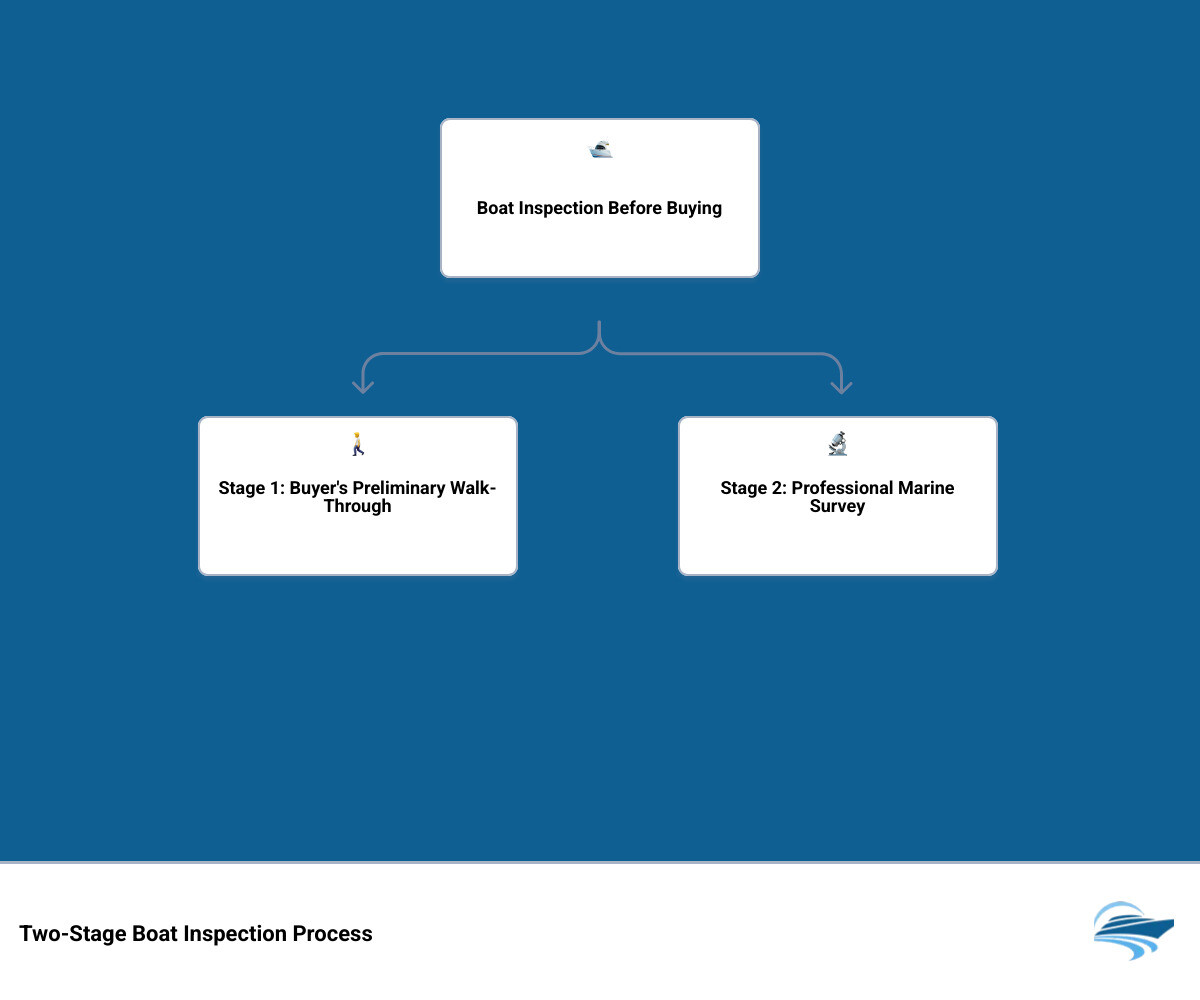
The inspection process works best in two stages: your own preliminary walk-through to spot obvious red flags, followed by a comprehensive professional marine survey. This approach saves you time and money by helping you eliminate unsuitable vessels early, while ensuring that serious candidates receive the thorough evaluation they deserve.
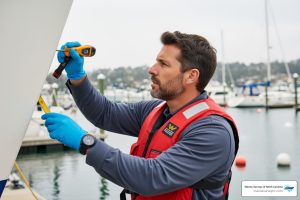
I’m Andrew Gallant, a SAMS-certified marine surveyor with Marine Surveys of North Carolina, and I’ve conducted hundreds of boat inspections before buying across coastal and inland waterways. My experience has shown that a methodical, two-stage inspection approach consistently protects buyers from costly surprises and provides the confidence needed to move forward with a purchase.
Stage 1: Your Preliminary Walk-Through Inspection
Before we invest in a full professional survey, a preliminary walk-through is an essential first step. This initial inspection, often referred to as a “10-minute walk-through,” allows us to quickly assess the boat’s overall condition, identify any obvious signs of neglect, and determine if the vessel warrants further investigation. It’s about getting a crucial first impression that can save us significant time and money if immediate red flags appear. We recommend having a notebook, pen, flashlight, inspection mirror, and camera handy.
A useful checklist for your evaluation can be found at A useful checklist for your evaluation. This guide helps structure your observations, ensuring you don’t miss critical areas during this initial assessment.
Exterior Hull and Structure
The hull is the foundation of any boat, and its condition speaks volumes about the vessel’s overall care and history.
We begin by locating the Hull Identification Number (HIN). Every boat built since 1972 is required to have a 12-digit HIN, similar to a car’s VIN. This number identifies the manufacturer, model, serial number, and date of manufacture. It’s crucial for verifying the boat’s identity and can be used to check for theft, salvage history, and ownership. We can also use the HIN to check for recalls using the USCG Recall Database.
Next, we visually scan the hull. We look for signs of repaired damage, uneven surfaces, or mismatched finishes, which can indicate previous collisions or significant repairs. Standing at the bow or stern, we use the reflection of light to assess the gel coat’s smoothness and fairness. Any sudden jumps in the reflection can point to unfair spots or underlying structural issues. We also look for blisters, which are common on fiberglass hulls due to osmotic pull, though an extensive “pimple rash” can indicate a major repair job.
The transom, where the engine is typically mounted, requires particular attention. We tap the outer surface of the transom with a screwdriver handle or a small hammer. A solid, ringing tone indicates good integrity, while a dull thud suggests water infiltration into the core material—a “soggy transom.” Stains below transom fittings can also be a sign of a leaking transom.
Through-hull fittings are critical for safety. We prefer bronze or metal fittings over plastic ones, as degraded plastic through-hull fittings are a common cause of boats sinking at the dock. We ensure all through-hulls have sea valves, not ordinary gate valves, and that hoses attached to them are double-clamped with stainless steel.
Finally, we inspect the hull-to-deck joint for any gaps or signs of fresh sealant, which could indicate ongoing leak issues. Mildew in the cabin can also be a tell-tale sign that this joint is leaking. For more information on potential issues we often uncover, you can review our insights on More info about hidden issues we find.
Deck and Interior Condition
Moving to the deck, we look for soft spots underfoot, which can be a serious indicator of rot or delamination in cored decks. We perform a tap test using a small hammer or screwdriver handle, listening for dull thuds instead of sharp, crisp sounds. This is a primary method for detecting delamination. While we use specialized moisture meters for in-depth analysis, this initial tap test provides valuable preliminary information.

We examine the condition of deck hardware, such as cleats, winches, and stanchions. We ensure they are properly through-bolted with large washers and backing plates, rather than just secured with screws. Railings should be sturdy, at least 24 inches tall, with stanchions no more than seven feet apart. We also assess the non-skid surfaces, ensuring they provide adequate traction.
Inside the cabin, we pay close attention to our senses. Any persistent odors—especially musty smells, mold, or gasoline—are immediate red flags. We look for signs of water damage, such as stains or dampness around windows, hatches, and bilges. We check the condition of upholstery, cushions, and other soft goods, noting any mildew or excessive wear. We also inspect floorboards, carpets, and interior woodwork for signs of neglect, rot, or structural issues.
The head (bathroom), plumbing, and galley areas are also crucial. We visually check for leaks around sinks, toilets, and water tanks. A quick look at the overall cleanliness and functionality of these systems can reveal a lot about the previous owner’s maintenance habits.
Stage 2: A Deeper Dive into Critical Systems
Once a preliminary inspection suggests a vessel is a viable candidate, we move to a more detailed evaluation of its critical systems. This stage requires a more thorough approach, often involving a bit more time and sometimes specialized tools.
Engine and Propulsion System Assessment
The engine is often the most expensive component of a boat. A thorough engine inspection is paramount. We start with a visual inspection, looking for signs of rust, salt build-up, or water markings, especially in the bilge. We check fluid levels and appearance: milky oil on the dipstick indicates water in the engine oil, a serious issue. We also inspect belts, hoses, and electrical connections for wear, cracks, or corrosion.
While an hour meter provides some indication of usage, it can be easily swapped. We look for evidence of regular maintenance, such as service receipts or a detailed maintenance log. If possible, we perform a cold start and listen for any unusual noises, excessive vibrations, or difficulty starting. Observing the color of exhaust smoke is also informative: blue smoke indicates burning oil, black smoke suggests incomplete combustion, and white smoke can be water vapor or coolant.
We also assess the propulsion system. For outboard or sterndrive boats, we inspect the propeller and skeg for damage, which can indicate careless operation. We check for excessive play (more than a quarter-inch) in the stern drive, which could signal worn gimbal bearings. For inboard systems, we look at the shaft, struts, and propellers for any signs of damage or wear.
Electrical, Electronics, and Safety Equipment
Electrical systems on used boats can be a significant source of issues, including fire hazards, if not properly maintained or installed. We check battery security and ensure they are housed in acid-proof containers with proper ventilation. We look for signs of amateur wiring, such as bare wires, terminations sealed only with electrical tape, or household twist-on connectors, which should be replaced immediately.
Circuit protection is vital. We ensure all circuits are properly fused or have circuit breakers, and that there isn’t a “crowded post” syndrome with too many wires connected to a single battery terminal. AC outlets in critical areas like galleys, heads, and machinery spaces should have Ground Fault Circuit Interrupter (GFCI) protection. We also verify that wiring is marine-grade, multi-strand wire, neatly routed, labeled, and supported at regular intervals (every 18 inches) and kept high out of the bilge. The American Boat and Yacht Council (ABYC) standards provide comprehensive guidelines for safe boat systems.
We test navigation lights, bilge pumps (manual and electric), and onboard electronics such as the GPS, VHF radio, and depth sounder to ensure they are functional. Finally, we verify that essential safety equipment—including life jackets, flares, fire extinguishers, and a first-aid kit—is present, in good condition, and meets U.S. Coast Guard requirements.
Special Considerations for Sailboat Inspection
Sailboats, with their complex rigging, mast, and keel systems, require a specialized focus during inspection. While many of the general hull, engine, and interior checks apply, certain components are unique and critical to a sailboat’s integrity and performance.
| Inspection Area | Powerboats | Sailboats |
|---|---|---|
| Hull & Structure | Focus on hull integrity, transom, running gear | Hull, keel-hull joint, rudder, chainplates |
| Propulsion | Engine, stern drive, outboard, shaft | Engine (auxiliary), shaft, propeller |
| Steering System | Hydraulic, cable, power steering | Cable, quadrant, tiller, rudder post |
| Above Deck | Deck hardware, cleats, railings, helm | Deck hardware, winches, stanchions, mast step |
| Key Systems | Electrical, fuel, plumbing, electronics | Electrical, fuel, plumbing, electronics, rigging |
| Unique Components | Trim tabs, wake systems | Mast, boom, standing & running rigging, sails |
Mast, Rigging, and Sails
The mast and rigging are a sailboat’s powerhouse, crucial for propulsion and structural integrity. We begin by inspecting the mast itself for straightness, secure welds, and any signs of damage or corrosion. We pay close attention to the mast step, where the mast meets the deck or keel, looking for compression damage or leaks.
Standing rigging (the wires that support the mast) is critical. We look for broken strands (often called “fishhooks”), nicks, kinks, or corrosion, especially at terminal fittings like swages, which are common points of failure. The general rule of thumb is that wire rigging should be replaced every eight to 10 years, sooner if the boat has seen heavy use or offshore passages. We also examine chainplates (the metal plates that secure the rigging to the hull) for movement, rust, cracks, or crevice corrosion, which can be particularly insidious as it often occurs in inaccessible areas.
Running rigging (sheets and halyards) should be checked for wear, chafe, and stiffness. We test winches for smooth operation and ensure they are properly mounted and maintained.
Finally, we inspect the sails and canvas. We unfurl each sail to check for tears, weak stitching, or signs of UV damage. Hoisting the sails fully allows us to assess their shape and ensure they haven’t lost their efficiency. Canvas coverings like biminis and dodgers should also be checked for UV degradation and mildew.
Keel and Rudder Integrity
The keel and rudder are essential for a sailboat’s stability and steering. During a haul-out inspection, we pay close attention to the keel-hull joint, looking for cracks, impact damage, or signs of past grounding. A professional survey will often include checking the keel for cracks, rust, or other signs of past collisions.
We examine the rudder for smooth movement, binding, or excessive play in the steering system. The rudder post and its bearings should be checked for corrosion or damage. For boats with retractable keels, we ensure they operate smoothly and lock securely. The cutless bearing, which supports the propeller shaft, is also inspected for wear, as excessive wobble can lead to significant issues.
Stage 3: The Professional Boat Inspection Before Buying
While our preliminary walk-through can help us filter out obvious problems, it cannot replace the practiced eye and expertise of a professional marine surveyor. For any significant investment, a professional boat inspection before buying is non-negotiable.
Why a Pre-Purchase Marine Survey is Non-Negotiable
A marine surveyor acts as your independent expert, much like a home inspector for a house. Their role is to provide a detailed, unbiased assessment of the vessel’s condition, helping you make an informed decision and protect your interests. The survey is a “snapshot in time” of the boat’s condition, providing clarity on its present state.
The most common type of survey for buyers is a Condition & Valuation (C&V) survey. This comprehensive assessment covers the hull, deck, structure, and all major systems, offering an objective evaluation of the vessel’s fair market value. It identifies issues that might range from minor maintenance items to major structural defects, giving you crucial information for negotiation or to reconsider the purchase entirely. We provide detailed information on What a survey includes.
Furthermore, a professional survey is often required by insurance companies and lenders, particularly for larger or more expensive vessels. They rely on the surveyor’s report to determine coverage eligibility and loan amounts. We are accredited by reputable organizations such as the Society of Accredited Marine Surveyors (SAMS) and the National Association of Marine Surveyors (NAMS), ensuring we meet strict technical and ethical standards.
Understanding the Survey Process and Costs for a boat inspection before buying
A comprehensive survey involves several critical components:
- In-Water Inspection: An initial assessment of the vessel’s visible exterior and interior systems while afloat.
- Haul-Out Inspection: The boat is removed from the water for a thorough examination of the hull below the waterline, including the running gear (propeller, shaft, rudder) and through-hull fittings. This is a critical step, as many significant issues are only visible when the boat is out of the water. Additional charges for the short haul at a boatyard can run another $15 per foot.
- Sea Trial: This is where we test the boat’s performance under power, assessing the engine’s operation, steering, electronics, and overall handling. A sea trial usually lasts 30-60 minutes.
The survey itself can take a few hours to a full day, depending on the boat’s size and complexity. Following the inspection, we provide a detailed report with observations, photos, and recommendations. This report is your roadmap for understanding the boat’s true condition.
The cost of a professional survey typically ranges from $20 to $25 per foot of boat length. Specialized surveys, such as engine or sailboat rig surveys, may incur additional costs, generally ranging from $500 to $1000, depending on the number of engines and the age of the rig. While these costs represent an investment, they are minimal compared to the potential expenses of unforeseen repairs.
When working with a surveyor, we encourage you to be present during the inspection and sea trial. Ask questions, but allow us to work methodically. Our goal is to provide an objective assessment, not to negotiate on your behalf. The findings in our report are intended to arm you with information, allowing you to interpret the results rationally and distinguish between major issues requiring seller attention and minor items that are typically a buyer’s responsibility.
Finalizing the Purchase: Paperwork and Pitfalls
A thorough physical inspection is only one part of a savvy boat inspection before buying. Equally important is due diligence regarding paperwork and understanding common pitfalls.
Securing a Clean Title and Avoiding Liens
Before finalizing any purchase, it is imperative to ensure the boat has a clean title, free of any liens or encumbrances. For documented vessels (those registered with the U.S. Coast Guard), we check the title through the National Vessel Documentation Center. For state-titled boats common in North Carolina, we work with the appropriate state agency.
We order and carefully read the abstract of title to confirm that all mortgages and liens are discharged. It’s important to be aware of potential “hidden liens” that may not be recorded with the Coast Guard but can still be effective. These can arise from unpaid services, such as yard work, fuel, or repairs, or even from damage the boat may have caused to another vessel. IRS liens, for instance, are recorded with the Secretary of State’s office, not the Coast Guard, and should also be checked in the seller’s residence state and the boat’s state of registration. If you’re uncertain about interpreting an abstract of title or uncovering potential issues, consulting a maritime lawyer is always a prudent step.
Common Pitfalls and the Role of a Broker
One common pitfall is the “as is” purchase. While some sellers may offer boats “as is,” it’s crucial to understand the implications. An “as is” sale typically means you accept the boat in its current condition with no recourse for later-finded defects. This underscores why a professional survey is so vital, even with an “as is” clause.
Ignoring survey findings, especially for major issues, is another significant mistake. We understand that finding a boat we love can lead to emotional buying. However, allowing emotions to override a surveyor’s professional assessment can result in costly repairs and safety hazards down the line. The survey report provides leverage for negotiation; we can request the seller address major deficiencies or adjust the purchase price accordingly.
While a boat dealership or broker can facilitate the transaction, their role in the inspection process is generally limited. They typically act as intermediaries, connecting buyers and sellers. While they may provide access to the vessel and its records, it is always the buyer’s responsibility to arrange and pay for an independent survey. A reputable broker will encourage a survey and facilitate the process, but they do not perform the survey themselves. Their primary interest is in completing the sale, whereas our interest, as independent surveyors, is solely in protecting you, the buyer.
Conclusion
The journey to owning a boat in North Carolina—whether it’s for cruising the Outer Banks, fishing in Morehead City, or enjoying Lake Norman—is an exciting one. However, the path to a confident purchase is paved with thorough due diligence. A two-stage inspection process, starting with your own discerning eye and culminating in a comprehensive professional marine survey, is the most effective way to protect your investment.
A professional survey is not an expense; it is an investment in safety, financial security, and peace of mind. It’s the critical step that empowers you to make an informed decision, ensuring your prospective vessel meets your expectations and the highest standards of safety and condition. Marine Surveys of North Carolina provides the SAMS-certified expertise needed for these critical decisions, offering detailed, unbiased inspections across Wilmington, Beaufort, New Bern, and all our service areas.
To ensure your prospective vessel meets the highest standards of safety and condition, schedule a comprehensive marine survey with our certified professionals.