Why Pre-Purchase Boat Inspections Are Critical to Protecting Your Investment
Pre-purchase boat inspection is a thorough, non-destructive evaluation of a vessel’s structural integrity, mechanical systems, and overall condition, conducted by an accredited marine surveyor before finalizing a purchase. It serves to identify hidden defects, assess fair market value, and provide buyers with the information needed to make an informed decision or negotiate repairs.
What a Pre-Purchase Boat Inspection Typically Includes:
- Hull and deck structural assessment – moisture readings, percussive sounding, delamination checks
- Mechanical systems evaluation – engines, fuel systems, exhaust, cooling
- Electrical systems review – wiring integrity, battery security, bonding, shore power
- Plumbing and through-hull fittings – condition, corrosion, leak risks
- Safety equipment inventory – compliance with USCG and ABYC standards
- Sea trial performance testing – engine function under load, steering, vibration analysis
- Written report with deficiencies – detailed findings, repair recommendations, market valuation
Buying a boat is exciting. It opens doors to coastal adventures, offshore fishing trips, and time on the water with family. But beneath the polished topsides and shining teak, serious risks can hide—risks that cost thousands to repair and compromise safety.
A professional pre-purchase inspection is the only objective way to know what you’re really buying. It reveals structural damage, faulty wiring, engine wear, and compliance issues that sellers may not disclose and untrained buyers cannot detect. Without one, you’re making a six-figure decision on trust alone.
Many boats look pristine at the dock. Clean bilges, fresh paint, and staged interiors create a favorable impression. But moisture intrusion, corroded fuel tanks, and amateur electrical work don’t announce themselves during a casual walkthrough. These are the problems that surface after closing—when it’s too late to negotiate or walk away.
A thorough survey protects your investment, satisfies insurance underwriting requirements, and provides leverage in negotiations. It also establishes a baseline for future maintenance and helps you budget for the true cost of ownership. For serious buyers, it’s not optional.
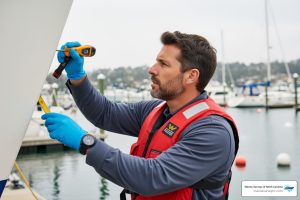
I’m Andrew Gallant, a certified marine surveyor and principal surveyor at Marine Surveys of North Carolina, accredited as a Surveyor Associate with The Society of Accredited Marine Surveyors (SAMS®). I’ve conducted hundreds of pre-purchase boat inspections across North Carolina’s coastal and inland waterways, helping buyers avoid costly mistakes and make confident decisions based on factual, unbiased reporting.
Understanding the Pre-purchase Boat Inspection Process
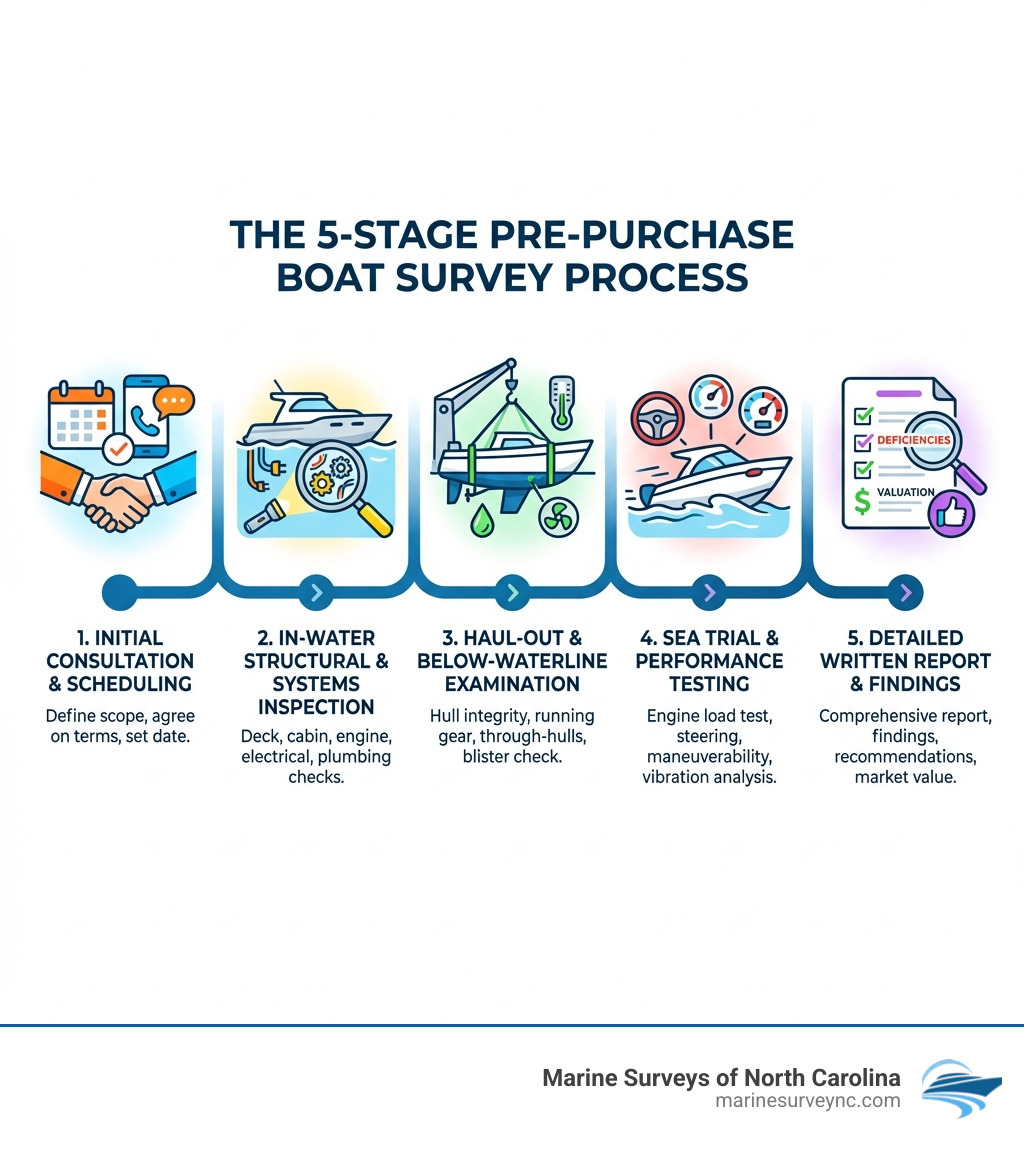
When we step aboard a vessel for a Pre-Purchase Marine Survey, we are performing a comprehensive “Condition and Value” (C&V) assessment. This is the most detailed type of inspection available. Unlike a simple insurance renewal survey, a pre-purchase survey is designed specifically to protect the buyer’s interests. We adhere to the strict professional standards set by the Society of Accredited Marine Surveyors (SAMS) and reference the National Association of Marine Surveyors (NAMS) guidelines to ensure every critical system is evaluated.
It is important to understand that a pre-purchase boat inspection is a non-destructive “snapshot in time.” We do not disassemble engines or peel back fiberglass to see what is inside a stringer. Instead, we use advanced tools like moisture meters and thermal imaging, combined with percussive sounding, to “see” what the naked eye cannot. We are looking for the story the boat tells through its current condition.
As your advocate, our role is to provide an unbiased technical report. We don’t have a stake in whether the sale closes; our only priority is ensuring you have the facts. This process is essential for Beyond the Hull: Unpacking the Purpose of a Marine Survey, which goes far beyond a simple “pass/fail” grade. It provides the technical documentation required by lenders for financing and by underwriters for insurance coverage in North Carolina.
Critical Components: The Structural and Systems Checklist
A high-quality vessel is a complex marriage of structural engineering and mechanical systems. During a pre-purchase boat survey in North Carolina, we follow a methodical checklist to ensure no stone is left unturned. We evaluate the vessel against the standards of the American Boat and Yacht Council (ABYC), which are the “gold standard” for boat building and repair.
The Essential Pre-Purchase Boat Inspection Checklist focuses on several key areas:
- Structural Integrity: Examining the hull, deck, stringers, and bulkheads for signs of stress or failure.
- Thru-Hull Fittings: Inspecting every opening below the waterline. Corroded or seized valves are a primary cause of vessels sinking at the dock.
- Fuel Systems: Checking for leaks, corrosion in aluminum tanks, and compliance with Code of Federal Regulations (CFRs).
- Steering and Controls: Ensuring the vessel responds accurately and safely to operator input.
Evaluating Hull and Deck Integrity
The hull is the most expensive part of the boat to repair. We use percussive sounding—tapping the hull with a specialized hammer—to listen for the “dull thud” that indicates delamination or a soggy core. In North Carolina’s humid climate, moisture intrusion is a common enemy. Water that seeps into a cored deck through poorly bedded hardware can lead to rot and structural softening.
We also look for osmosis blisters in the gelcoat and stress cracks that might indicate previous collisions or structural flexing. These Essential Boat Inspection Tips are what separate a savvy buyer from one who inherits a “project boat” disguised as a turnkey vessel.
Mechanical and Electrical Pre-purchase Boat Inspection Warnings
Electrical issues are the leading cause of boat fires. We frequently uncover amateur “dockside” wiring—house-grade wire or wire nuts that have no place on a boat. We check battery security (a loose battery is a sign of a careless owner) and the integrity of the bonding system to prevent galvanic corrosion.
On the mechanical side, we look for “red flags” like milky oil on a dipstick (indicating water in the engine) or excessive rust on engine mounts. Our report on the Top 7 Hidden Issues Found in Pre-Purchase Surveys on NC Coast often highlights these hidden mechanical failures that could lead to a catastrophic breakdown offshore.
The Role of Sea Trials and Performance Evaluations
A boat can look perfect at the slip and fail miserably once it hits the chop of the Pamlico Sound or the Atlantic. A sea trial is a critical component of the pre-purchase boat inspection. We observe the engines from a “cold start” to see how they smoke and idle. Once underway, we push the vessel to its wide-open throttle (WOT) rated RPM to ensure the cooling and fuel systems can handle the load.
During the sea trial, we perform a vibration analysis to check for bent shafts or out-of-balance propellers. We also test all electronics—GPS, radar, and VHF—under actual operating conditions. This performance evaluation is a core part of What a Pre-Purchase Boat Survey in North Carolina Includes, providing a real-world test of the vessel’s systems that simply cannot be replicated at the dock.
Financial and Legal Due Diligence: Titles, Liens, and Insurance
The technical condition of the boat is only half the battle. You must also ensure you are buying a “clean” vessel. We verify the Hull Identification Number (HIN) against the registration and title documents. For larger vessels, we recommend checking the National Vessel Documentation Center to obtain an Abstract of Title.
This legal due diligence identifies:
- Outstanding Mortgages: Ensuring the seller has the right to sell.
- Maritime Liens: Unpaid repair bills or dockage fees that “stick” to the boat, not the owner.
- IRS Tax Liens: Which can be recorded against the vessel and must be cleared before transfer.
A Condition & Valuation Survey Boat Purchase provides the Fair Market Value (FMV) needed for your lender and insurance company. Without an accredited survey, securing a loan or an agreed-value insurance policy in places like Wilmington or Morehead City can be nearly impossible.
Frequently Asked Questions about Pre-purchase Boat Inspections
How much does a Pre-purchase boat inspection cost?
Survey fees are typically based on the length overall (LOA) of the vessel. While prices vary by complexity, the following table provides a general guideline for professional surveying services in North Carolina.
| Vessel Length | Estimated Survey Fee | Additional Considerations |
|---|---|---|
| Under 25′ | $500 – $650 (Min. Charge) | Small powerboats, center consoles |
| 26′ – 35′ | $22 – $25 per foot | Mid-size cruisers, sportfishers |
| 36′ – 50′ | $25 – $28 per foot | Yachts, large motor vessels |
| Over 50′ | Quote Required | Complex systems, multiple engines |
Note: Haul-out fees (usually $15-$20/ft) and specialized engine surveyor surcharges are typically separate costs paid directly to the marina or mechanic.
Can a survey report help with price negotiation?
Absolutely. The findings in our Top 7 Hidden Issues Found in Pre-Purchase Surveys on the NC Coast report are often used to renegotiate the purchase price. If we find $10,000 worth of “Priority A” safety deficiencies (like outdated fire systems or fuel leaks), that is a direct credit you can ask for from the seller. A survey often pays for itself many times over by uncovering these hidden costs before you sign the closing papers.
What are the limitations of a marine survey?
As mentioned, we do not perform destructive testing. We cannot see inside a sealed fuel tank or inside an engine block without a separate mechanical teardown. A survey is a professional opinion based on visible and accessible components at the time of inspection. It is not a guarantee that a pump won’t fail next week, but it significantly reduces the statistical probability of a major surprise. For vessels in Morehead City, we emphasize that the survey is the best possible risk-mitigation tool available to a buyer.
Conclusion
A pre-purchase boat inspection is the most important step in the buying process. Whether you are looking at a classic Hatteras in New Bern or a modern center console in Wilmington, the goal remains the same: protecting your physical safety and your financial investment.
At Marine Surveys of North Carolina, our SAMS SA certified surveyors provide the detailed, unbiased reporting you need to steer these complex decisions. We serve the entire coast, from the Outer Banks to Lake Norman, ensuring our clients enter boat ownership with their eyes wide open.
Don’t let your dream boat become a financial nightmare. Request a pre-purchase survey or Request an insurance survey today to ensure your next vessel is safe, sound, and worth the investment.