Why a Vessel Condition Survey Is the Last Line of Defense Before You Buy
A vessel condition survey is a comprehensive, independent inspection of a boat or yacht’s structural, mechanical, electrical, and safety systems—conducted by a qualified marine surveyor to assess its true condition, identify defects, and determine fair market value.
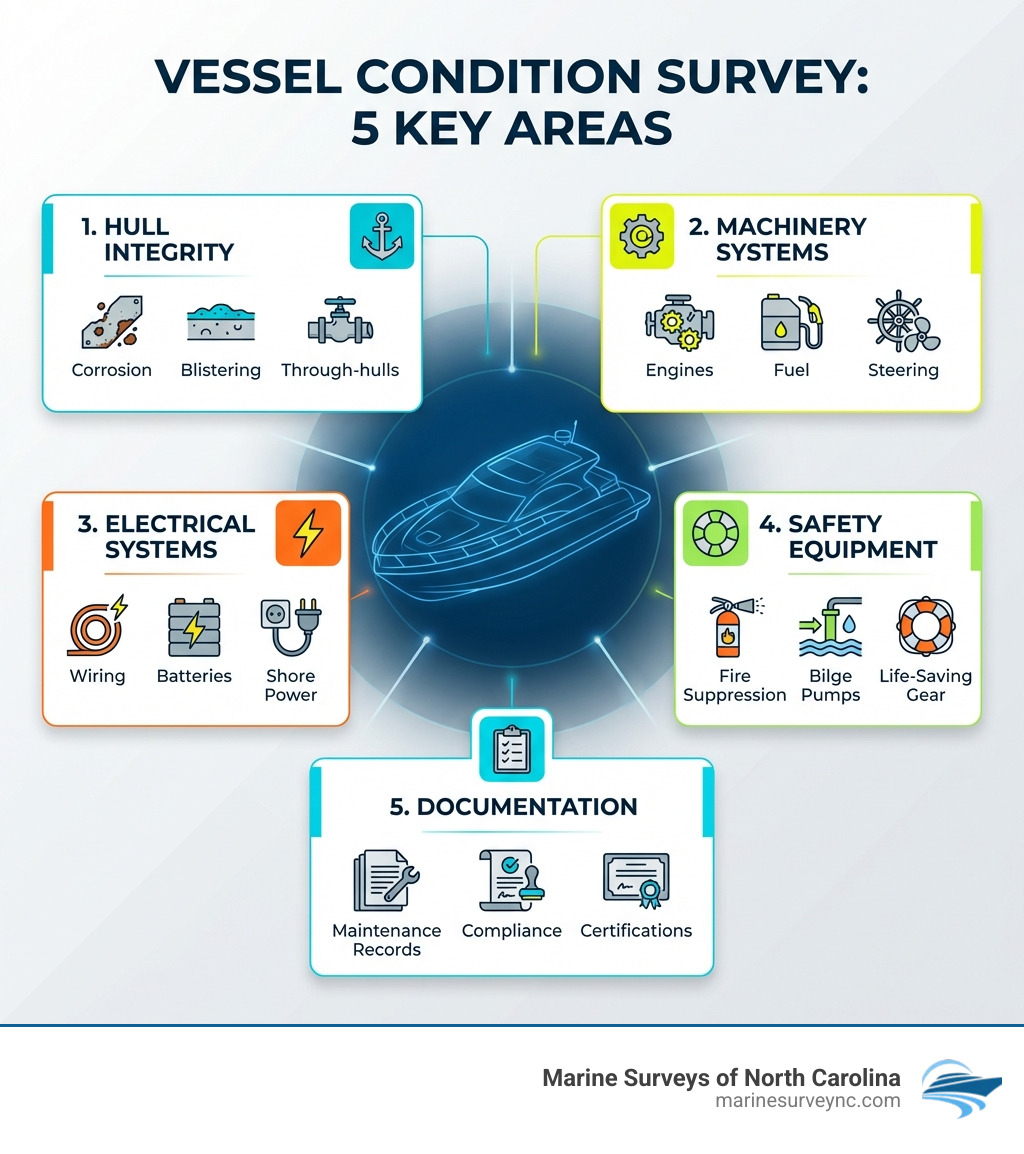
What a Vessel Condition Survey Covers:
- Hull and Structure – Fiberglass integrity, blistering, osmosis, through-hulls, and running gear
- Machinery – Main engines, generators, fuel systems, cooling systems, and exhaust
- Electrical Systems – Wiring, battery banks, shore power, grounding, and corrosion
- Safety Equipment – Fire suppression, bilge pumps, navigation lights, life-saving gear
- Documentation – Compliance with regulations, maintenance records, and certification status
This inspection is not a formality. It’s the final opportunity to identify costly issues before a purchase becomes permanent. Whether you’re buying a 35-foot cruiser or a 60-foot motor yacht, a thorough survey protects you from hidden damage, expensive repairs, and serious safety risks.
For buyers, a vessel condition survey provides negotiation leverage and peace of mind. For insurers, it verifies that a vessel meets underwriting standards. For owners, it documents condition for claims, compliance, or resale. In 2024 alone, one marine insurance club conducted 461 condition surveys worldwide—demonstrating the critical role these inspections play in managing risk and ensuring seaworthiness.
I’m Andrew Gallant, a SAMS®-certified marine surveyor and principal at Marine Surveys of North Carolina. Over the course of my career, I’ve conducted hundreds of vessel condition surveys across North Carolina’s coastal and inland waterways, identifying structural failures, engine defects, and safety hazards that would have otherwise gone unnoticed.
What a Vessel Condition Survey Is and Why It’s Non-Negotiable
A vessel condition survey is a methodical process of inspecting and evaluating the physical state, operational performance, and maintenance level of a boat or yacht. Conducted by an independent and qualified marine surveyor, this assessment culminates in a detailed report outlining findings and recommendations. It is a critical step for any serious buyer, owner, or insurer to assess a vessel’s true state, ensuring its safety, quality, and value.
The primary purposes of a vessel condition survey are multifaceted:
- Pre-purchase assessment: For buyers, a survey serves as an essential due diligence tool, uncovering potential issues that could impact the vessel’s value, safety, or operational costs. This insight can significantly strengthen negotiation power, allowing for informed decisions before committing to a purchase.
- Insurance requirements: Insurers often mandate a vessel condition survey—especially for older vessels (typically 10 years or more)—to determine risk, establish coverage terms, and verify that the vessel meets their underwriting standards. This ensures both the insurer and the owner are clear on the vessel’s condition. Learn about insurance surveys
- Damage evaluation: Following an accident or incident, a survey can determine the cause and extent of damage, providing crucial information for insurance claims and repair planning.
- Regulatory compliance: Surveys verify that a vessel complies with local, state, and international regulations and standards, such as those from ABYC (American Boat and Yacht Council) and USCG (U.S. Coast Guard) CFRs.
- Preventative maintenance and long-term planning: For existing owners, regular vessel condition surveys help identify potential problems early, allowing for proactive maintenance that can prevent costly repairs and extend the vessel’s lifespan.
For all stakeholders involved in marine vessels in North Carolina, a vessel condition survey is non-negotiable. It provides peace of mind for buyers, ensures owners meet their due diligence, and allows insurers to effectively mitigate risk. It is a critical risk management tool that protects your investment and ensures safety on the water.
The Different Types of Marine Condition Surveys
While the core objective of assessing a vessel’s condition remains, various types of surveys cater to specific needs and circumstances:
- Pre-Purchase Survey: This is the most comprehensive type, performed before purchasing a vessel. It covers nearly every accessible aspect of the vessel to give the buyer a complete understanding of its condition and fair market value. More info about pre-purchase surveys
- Condition and Valuation (C&V) Survey: Often requested by insurance companies or financial institutions, this survey determines a vessel’s overall condition and its current market value. It’s similar to a pre-purchase survey but may be custom to meet specific insurance or lending requirements.
- Insurance Survey: Specifically designed to meet the requirements of an insurance underwriter, this survey focuses on the vessel’s safety, seaworthiness, and compliance with insurance standards.
- Damage Survey: Conducted after an incident, this survey assesses the extent of damage, determines the cause, estimates repair costs, and helps in the insurance claims process.
- Preliminary Survey: A less extensive inspection, often used by buyers to quickly assess a vessel’s general condition before committing to a full pre-purchase survey. While it can identify obvious red flags, it does not offer the same level of detail or protection. Comparing preliminary vs. full surveys
Each type has a specific focus to meet different needs, but all contribute to a thorough understanding of the vessel’s health.
When is a Vessel Condition Survey Required?
The need for a vessel condition survey often arises from specific circumstances, making it a crucial step in various marine transactions and ownership phases:
- Insurance underwriting: Most insurance providers will require a C&V or insurance survey for new policies, especially for vessels reaching a certain age (typically 10 years or older) or those with significant value. This helps them assess risk accurately.
- Financing approval: Banks and lenders typically require a vessel condition survey to confirm the value and condition of the collateral before approving a loan for a vessel purchase.
- Pre-purchase: This is perhaps the most common trigger. Any serious buyer should insist on a comprehensive pre-purchase survey to avoid unforeseen issues and ensure they are making a sound investment.
- Post-casualty assessment: After any significant event like grounding, collision, fire, or severe weather damage, a damage survey is essential to assess the vessel’s structural integrity and determine repair needs.
- P&I Club entry: Protection & Indemnity (P&I) Clubs, which provide liability insurance for vessel owners, often require condition surveys for vessels entering their coverage, particularly if the vessel is 10 years of age or more, or if there have been claims due to technical defects, a casualty, or port state control detention.
- Vessel age triggers: As vessels age, insurers and regulatory bodies may mandate more frequent or in-depth surveys to ensure continued seaworthiness.
- Flag state changes: When a vessel changes its country of registration (flag state), new surveys may be required to ensure compliance with the new flag’s specific regulations.
- Reactivation after layup: If a vessel has been laid up for an extended period (e.g., exceeding six months), a survey might be triggered before it returns to active service to confirm all systems are operational and safe.
- Classification downgrade: A downgrade in a vessel’s Classification Society status can also trigger a mandatory vessel condition survey to address the underlying issues.
These triggers highlight that a vessel condition survey is not merely an option but a frequently required and essential part of responsible vessel ownership and marine operations in North Carolina.
The Anatomy of a Comprehensive Vessel Condition Survey
A thorough vessel condition survey is a systematic and comprehensive procedure. Our SAMS®-certified marine surveyors adhere to stringent industry standards, including those set by ABYC, NFPA, and USCG CFRs, ensuring that every inspection is both detailed and consistent.
During an inspection, we employ a range of tools and methods:
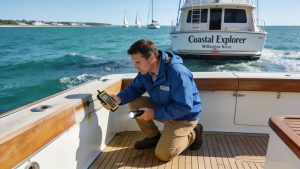
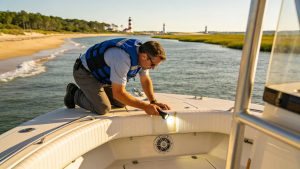
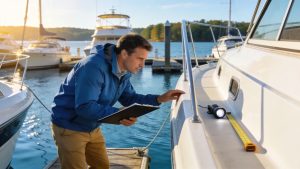
- Visual inspection: This is the foundation of any survey, involving a meticulous look at all accessible areas of the vessel, both inside and out. We examine for signs of wear, corrosion, damage, leaks, and previous repairs.
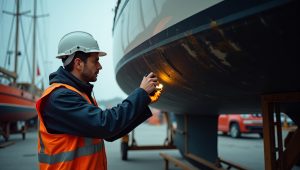
- Physical testing: We physically test operational components where possible, such as seacocks, steering mechanisms, and safety equipment. Percussion sounding, often done with a small hammer, helps identify delamination in fiberglass hulls or compromised wood structures.
- Technical methods: Advanced tools like moisture meters are used to detect hidden moisture content in fiberglass laminates, which can indicate osmosis or core saturation. We also assess the integrity of electrical systems using appropriate diagnostic tools.
- Documentation review: A crucial part of the survey involves reviewing the vessel’s history, maintenance records, and all relevant certifications to ensure compliance and proper upkeep.
This systematic approach ensures that we cover every critical aspect of the vessel, providing a complete picture of its condition. What a pre-purchase survey includes
In-Water and Out-of-Water Hull Inspection
The hull is the primary structural component of any vessel, and its integrity is paramount. Our inspection covers both the visible and often hidden aspects of the hull:
-
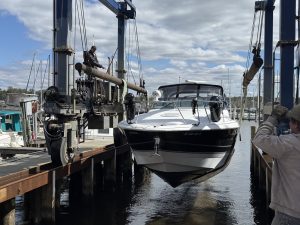
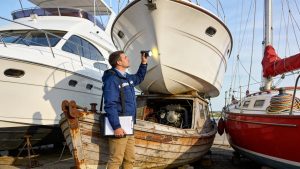
Out-of-water inspection (haul-out): This is essential for a comprehensive view of the hull below the waterline. During a haul-out at a North Carolina boatyard, we carefully inspect for:
- Blistering and osmosis: Small to large blisters on the gelcoat, indicating water ingress into the laminate.
- Delamination: Separation of fiberglass layers, which can compromise structural strength.
- Corrosion: On metal hulls, keel, or running gear.
- Through-hulls and transducers: Condition, proper installation, and sealing of all openings.
- Running gear: Propellers (condition, balance, damage), shafts (straightness, cutlass bearings), struts, and rudders (play, damage).
- Keel and rudder: Condition, signs of impact, and attachment.
- Anti-fouling paint: Effectiveness and build-up.
The haul-out process itself incurs additional costs, typically ranging from $10-$20 per foot of the vessel’s length, depending on the boatyard in areas like Wilmington or Morehead City.
-
In-water inspection: While less comprehensive than a haul-out, an in-water inspection allows us to observe the vessel’s waterline, trim, and any obvious issues that may be visible from the surface.
Machinery, Electrical, and Safety Systems
Beyond the hull, a vessel condition survey digs into the intricate networks that power and protect your vessel:
- Main engines and generators: We visually inspect for leaks, corrosion, proper installation, and maintenance. While we don’t perform a mechanical breakdown, we assess the overall condition, fluid levels, belts, hoses, and exhaust systems. We also recommend an engine systems review by a qualified mechanic for any pre-purchase survey. More on engine system reviews
- Fuel systems: Inspection of tanks, lines, filters, and vents for leaks, corrosion, and compliance with safety standards.
- Steering gear: Examination of hydraulic or cable systems for proper function, leaks, and excessive play.
- Electrical wiring and battery systems: Assessment of wiring for chafing, corrosion, proper gauge, and installation according to ABYC standards. We check battery condition, charging systems, and shore power connections.
- Fire suppression systems: Verification of fire extinguishers, fixed systems (e.g., FM-200, CO2), and alarms.
- Bilge pumps: Testing of automatic and manual bilge pump systems for functionality and capacity.
- Life-saving equipment: Inspection of life rafts, life jackets, flares, and other safety gear for proper type, quantity, and expiration dates.
- Navigation electronics: While not typically a deep dive into every electronic function, we ensure basic operability and condition of essential navigation equipment.
- Management policies and procedures: For larger or commercial vessels, we also assess the effectiveness of onboard management practices, maintenance schedules, and safety protocols, as these contribute significantly to the vessel’s overall condition and risk profile. Essential maintenance tips
Each of these components plays a vital role in the vessel’s overall safety, performance, and value. Our meticulous inspection aims to uncover any deficiencies that could lead to future problems.
Deciphering the Survey Report and Its Impact
The culmination of a vessel condition survey is a detailed, comprehensive report. This document is far more than a simple checklist; it’s a critical tool for informed decision-making, designed to be understood by buyers, sellers, insurers, and lenders alike.
A typical vessel condition survey report includes:
- Executive summary: A concise overview of the vessel’s overall condition, highlighting major findings and recommendations.
- Detailed findings and observations: A systematic breakdown of each inspected area (hull, deck, machinery, electrical, safety, etc.), noting specific conditions, discrepancies, and areas of concern.
- List of deficiencies: A clear, itemized list of all identified issues, ranging from minor maintenance items to significant structural or safety concerns.
- Recommendations: For each deficiency, the surveyor provides actionable recommendations for repair, replacement, or further investigation.
- Fair market value and replacement value: For C&V surveys, the report provides an objective assessment of the vessel’s current market value and its estimated replacement cost.
- Photographs: Visual documentation of key findings, both positive and negative, to support the written report.
- Supporting documentation: This may include a survey questionnaire, details of tested systems, and references to industry standards or regulations.
Our reports are structured to be precise and factual, giving you a clear picture of what we found. This transparency is crucial, as we’ve often uncovered hidden issues that significantly impact a vessel’s value or safety. See hidden issues found on the NC coast
Understanding the report also means understanding the broader context of marine surveys, including international standards for surveys and certification that apply to commercial vessels. Understanding international survey standards
From Findings to Action: What Happens Next
Once you receive your vessel condition survey report, the findings set in motion a series of important steps:
- Documenting deficiencies: The detailed list of deficiencies provides a clear roadmap of items requiring attention. We categorize these by urgency and potential impact.
- Prioritizing repairs: Not all deficiencies require immediate action. We help you understand which items are critical for safety or seaworthiness and which can be addressed as part of routine maintenance.
- Negotiation leverage: For buyers, the survey report becomes a powerful tool. Identified deficiencies can be used to negotiate a lower purchase price, request the seller to make repairs, or adjust the terms of sale.
- Impact on insurance coverage: If the survey reveals significant safety or structural issues, your insurer may require these to be rectified before providing full coverage. The report provides the necessary documentation for these discussions.
- Safety improvements: Addressing the recommendations in the report directly improves the vessel’s safety for all on board, reducing the risk of accidents or breakdowns.
- Regulatory compliance actions: For certain deficiencies, particularly on larger or commercial vessels, rectification may be legally required to maintain compliance with maritime regulations.
- Follow-up surveys: In some cases, particularly after major repairs or for insurance purposes, a follow-up survey may be required to verify that all recommended actions have been completed satisfactorily.
A vessel condition survey is not simply about identifying problems; it’s about providing the information needed to make informed decisions and take proactive steps to safeguard your investment and your safety.
How a professional vessel condition survey protects your investment
Investing in a professional vessel condition survey is one of the smartest decisions you can make as a boat owner or prospective buyer in North Carolina. Its value extends far beyond the day of the inspection:
- Uncovering hidden problems: We often find issues that are not apparent to the untrained eye—from hidden structural damage to latent electrical faults. Addressing these early prevents them from escalating into major, costly failures.
- Preventing future costly repairs: Proactive identification and repair of minor issues, as detailed in the survey report, can prevent them from becoming expensive, catastrophic problems down the line. It’s a preventative measure that saves you money.
- Ensuring seaworthiness: The survey rigorously assesses the vessel’s fitness for its intended use, confirming it can safely steer the waters of North Carolina, whether coastal or inland. This is paramount for the safety of you, your passengers, and others on the water.
- Verifying value: For buyers, the survey provides an objective valuation, ensuring you pay a fair price. For sellers, a clean survey can improve your vessel’s reputation and command a better sale price.
- Strengthening negotiation power: A detailed report gives buyers significant leverage during price negotiations or when requesting repairs from the seller.
- Maintaining quality and performance: Regular surveys help maintain and improve the quality and performance of a vessel by identifying and rectifying issues before they significantly impact operation.
A professional vessel condition survey protects and improves the value and reputation of your vessel by providing an objective, expert assessment.
The Investment: Costs, Benefits, and Selecting a Surveyor
We understand that considering the cost of a vessel condition survey is a natural part of the decision-making process. While it represents an upfront investment, the long-term benefits far outweigh the expense.
- Survey costs: On average, a vessel condition survey can cost anywhere from $15 to $25 per foot of the boat’s length. This range accounts for factors such as the vessel’s size, age, complexity (e.g., extensive systems, multiple engines), and specific type. A larger, older, or more complex vessel will naturally require more time and specialized attention, affecting the final cost.
- Additional costs: It’s important to budget for potential additional expenses that may arise during the survey process:
- Haul-out fees: To inspect the hull below the waterline, the vessel must be hauled out of the water. These fees can range from $10-$20 per foot, depending on the boatyard in locations like Wilmington, Beaufort, or Morehead City.
- Sea trial expenses: If a sea trial is requested (highly recommended for pre-purchase surveys), additional costs may be incurred for fuel and the surveyor’s time.
- Engine specialist fees: While a marine surveyor can assess the general condition of engines, we always recommend a separate, in-depth engine survey by a certified marine mechanic, especially for complex or high-value propulsion systems. This cost is separate from the general vessel condition survey.
While these costs may seem significant, consider them an investment in protecting a much larger asset. The potential savings from identifying major defects can easily eclipse the survey fees. How much will your boat inspection cost?
The Long-Term Benefits of a Quality Survey
The value of a quality vessel condition survey extends far beyond the immediate transaction. It serves as a cornerstone for responsible vessel ownership:
- Risk mitigation: By identifying and addressing potential hazards, a survey significantly reduces the risk of accidents, breakdowns, or costly emergencies on the water.
- Improved safety: Ensuring all safety systems are operational and structural integrity is sound directly contributes to the safety of everyone aboard.
- Financial protection: A survey protects your financial investment by verifying the vessel’s true condition and value, preventing you from overpaying or incurring unexpected repair costs.
- Peace of mind: Knowing that a qualified professional has thoroughly inspected your vessel provides invaluable peace of mind, whether you’re buying, selling, or simply enjoying your time on the water.
- Meeting requirements: A comprehensive survey ensures you meet the necessary requirements for insurance, financing, and, for commercial operators, regulatory compliance.
- Improved longevity: Proactive maintenance based on survey findings helps extend the operational life of your vessel, keeping it on the waters of North Carolina for years to come.
How to Choose a Qualified Marine Surveyor
The expertise and impartiality of your marine surveyor are paramount. Choosing the right professional is as important as the survey itself. Here’s what to look for:
-
Importance of credentials: Always seek a surveyor certified by recognized professional organizations. In the United States, the primary certifying bodies are:
- SAMS® (Society of Professional Marine Surveyors): Professional Marine Surveyors (AMS®) hold the highest designation, indicating extensive experience and ongoing education. Surveyors with the Surveyor Associate (SA) designation are working towards full certification under a mentorship program.
- NAMS® (National Association of Marine Surveyors): Similarly, NAMS-Certified Marine Surveyors (CMS) meet rigorous experience and educational standards.
These certifications ensure the surveyor adheres to strict ethical guidelines and professional standards.
- Experience with vessel type: Ensure the surveyor has specific experience with the type, size, and construction material of the vessel you are interested in. A surveyor specializing in wooden sailboats may not be the best choice for a large fiberglass motor yacht, for example.
- Sample reports: Ask to review a sample of their previous reports. This will give you an idea of their thoroughness, clarity, and reporting style.
- Professionalism: A qualified surveyor should be communicative, transparent, and able to explain complex findings in an understandable way.
- Unbiased assessment: An independent surveyor works solely for you, providing an objective assessment without conflicts of interest.
- Recommendations: Seek recommendations from other boat owners, brokers, or marine professionals in the North Carolina boating community.
Our team at Marine Surveys of North Carolina comprises SAMS®-certified professionals with extensive experience surveying vessels across Wilmington, Beaufort, New Bern, Morehead City, the Outer Banks, and Lake Norman. We are committed to providing unbiased, expert assessments that empower you to make confident decisions. Find a surveyor in Wilmington, NC or Find a surveyor in New Bern, NC.
Conclusion: Making an Informed Decision for Your Vessel’s Health
As we’ve explored, a vessel condition survey is far more than a mere inspection; it is a critical risk management tool and the final, essential check before committing to a significant marine investment. It empowers you with objective information, providing clarity on a vessel’s true state, potential liabilities, and overall value. This allows you to make an informed decision, whether you are buying, selling, insuring, or maintaining your vessel.
We understand that not every vessel will meet insurance or safety standards, and not every buyer is prepared for what a thorough survey may uncover. However, for those serious about protecting their investment and ensuring safety on the water, a professional vessel condition survey is indispensable. It’s the assurance you need to steer the complexities of vessel ownership with confidence.
Marine Surveys of North Carolina provides professional, SAMS SA certified marine surveying services for recreational and power vessels. We offer detailed, unbiased inspections for buying, insuring, or assessing damage, ensuring peace of mind and protecting investments across our beautiful North Carolina waterways.
Review our professional survey process and request an inspection