Why a Used Boat Survey Is the Most Important Step in Your Purchase
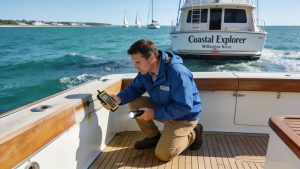
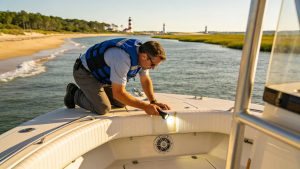
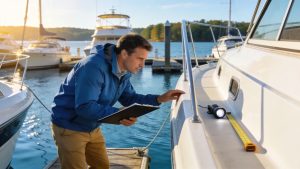
A used boat survey is a professional, detailed inspection of a vessel’s condition and value, conducted by a professional marine surveyor before purchase. It serves as your primary defense against hidden damage, undisclosed mechanical failures, and financial risk when buying a pre-owned boat.
What a Used Boat Survey Provides:
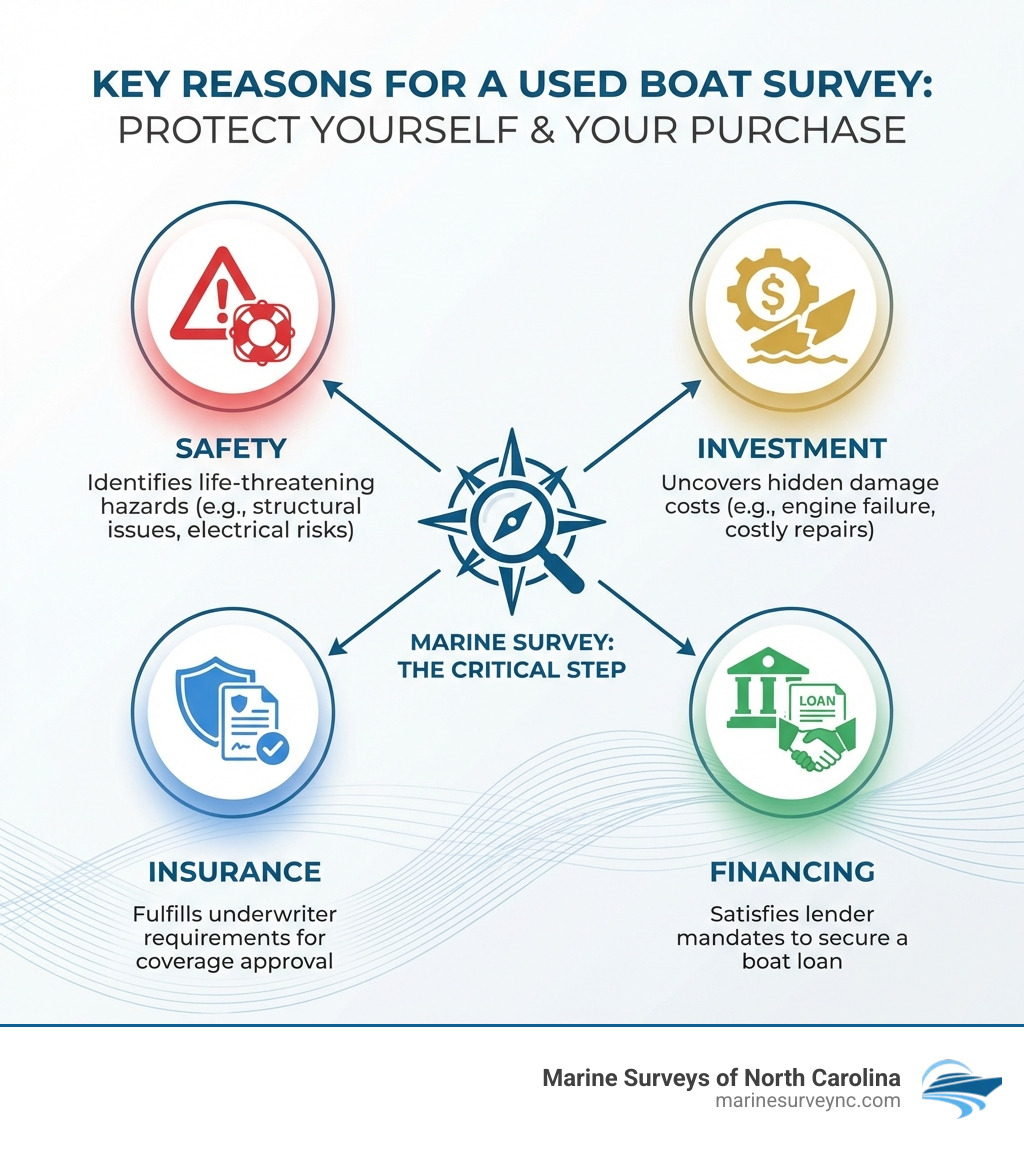
- Safety Assessment – Identifies structural damage, electrical hazards, and fuel system risks
- Financial Protection – Reveals costly repairs before you commit to the purchase
- Insurance & Financing – Required by most insurers and lenders for used vessels
- Negotiation Power – Documents deficiencies that can adjust the purchase price
- Regulatory Compliance – Confirms the boat meets Coast Guard and ABYC standards
Most serious boat buyers understand that what looks pristine at the dock can hide thousands of dollars in problems below the waterline. A survey is the only way to know what you’re really buying.
Purchasing a boat is one of the largest investments many people make, yet it’s also one where buyers have the least protection. Unlike a home inspection, there’s no standardized process for boat sales. Unlike a car, there’s no CarFax or lemon law. Without a professional survey, you’re buying blind.
According to industry data, 80% of boats for sale today are pre-owned. Many have been exposed to saltwater, sun, and storms for years. Others have been poorly maintained or repaired by owners who didn’t follow marine standards. The risks are real, and the consequences can be expensive.
Insurance companies and lenders know this. That’s why most require a current marine survey before issuing a policy or approving a loan. They won’t insure or finance what they can’t verify is safe and sound.
But a survey isn’t just a checkbox for paperwork. It’s your last opportunity to identify issues before the purchase becomes permanent. Once you sign the bill of sale, the boat—and all its problems—are yours.
I’m Andrew Gallant, a SAMS Surveyor Associate marine surveyor and the principal surveyor at Marine Surveys of North Carolina. Over the course of my career, I’ve conducted hundreds of used boat surveys across North Carolina’s coastal and inland waterways, uncovering everything from hidden hull damage to non-compliant electrical systems that could have led to fires. My goal is always the same: to provide buyers with the clear, unbiased information they need to make a confident decision.
Understanding the Marine Survey: Your Most Critical Due Diligence Step
A marine survey is a detailed evaluation of a vessel’s condition and value. It is performed by a trained professional after your offer has been accepted, typically contingent on a satisfactory survey. This crucial step acts as a safeguard, protecting your significant investment and ensuring the safety of your future boating endeavors. Without a professional survey, you risk inheriting a boat with severe, costly, or even dangerous underlying issues.
The financial risk of skipping a survey can be substantial. What appears to be a minor cosmetic issue could mask extensive structural damage, leading to tens of thousands of dollars in unexpected repairs. Consider the potential for hidden problems such as hull delamination, corroded exhaust systems, or faulty electrical wiring. These issues not only incur significant costs but also pose serious safety implications, from sinking to fire hazards. Our experience across North Carolina, from the busy marinas of Wilmington to the serene waters of the Outer Banks, consistently reveals that unseen issues are far more common than buyers realize. For a glimpse into some of these hidden dangers, we invite you to review our insights on the Top 7 Hidden Issues Found in Pre-Purchase Surveys on the NC Coast.
Furthermore, both insurance companies and lenders often mandate a current marine survey for used vessels. They rely on our expert assessment to evaluate risk, determine fair market value, and ensure the vessel meets safety standards before extending coverage or financing. Skipping this step means you may be unable to secure the necessary insurance or loan, effectively preventing the purchase altogether.
While a boat survey checklist can be helpful for a buyer’s preliminary inspection, it cannot replace a professional marine survey. A checklist provides a superficial overview, guiding you through visible components and basic functionality. However, a professional survey involves specialized tools, extensive knowledge of marine construction and systems, and an understanding of regulatory compliance. Our surveyors can detect subtle signs of structural weakness, use moisture meters to identify hidden water intrusion, and assess complex electrical and mechanical systems that a layperson simply cannot. The professional eye discerns what a checklist overlooks, distinguishing between minor wear and critical, systemic failures.
| Feature | Professional Marine Survey | DIY Boat Survey Checklist |
|---|---|---|
| Depth of Inspection | Comprehensive, non-destructive, uses specialized tools. | Visual, superficial, relies on buyer’s knowledge. |
| Expertise | Performed by a certified, experienced surveyor. | Relies on buyer’s limited knowledge. |
| Hidden Issues | Detects hidden structural damage, moisture, system failures. | Primarily identifies obvious or easily accessible problems. |
| Valuation | Provides fair market and replacement values. | No professional valuation. |
| Insurance/Financing | Required by most for coverage/loans. | Not accepted by insurers or lenders. |
| Negotiation Power | Strong, documented findings for price adjustment. | Limited, based on visible issues. |
| Safety Compliance | Assesses adherence to ABYC, USCG, and other standards. | May miss critical safety non-compliance. |
Types of Marine Surveys: Matching the Inspection to Your Needs
Not all marine surveys are created equal. The type of survey required depends on your specific needs and the stage of the boat ownership process. Understanding these distinctions is crucial for ensuring you receive the appropriate level of inspection. We offer various types of surveys to meet different requirements, each designed for a particular purpose.

Pre-Purchase Survey (Condition & Value)
The Pre-Purchase Marine Survey is the most comprehensive and common type of inspection for buyers of used boats. This extensive guide focuses primarily on this type of survey because it is your most critical tool when considering a purchase. Our pre-purchase surveys involve a thorough, non-destructive inspection of the entire vessel, both in and out of the water. We carefully examine the hull, deck, structural components, propulsion system, electrical systems, fuel systems, plumbing, safety equipment, and all installed accessories.
The goal is to provide you with a detailed understanding of the vessel’s current condition, identify any deficiencies, and assess its overall seaworthiness. Crucially, this survey also provides an estimated fair market value and replacement value. This information is invaluable for negotiation, helping you secure a fair price that reflects the boat’s true condition and any necessary repairs. It also offers peace of mind, knowing that you’ve made an informed decision.
Insurance Survey (C&V)
An Insurance Survey, often referred to as a Condition & Value (C&V) survey, is typically required by insurance underwriters before they will issue a policy for a used vessel. While it shares similarities with a pre-purchase survey, its primary focus is on assessing the boat’s insurability and identifying potential risks or hazards that could lead to a claim. For older vessels, a haul-out inspection is almost always a mandatory requirement by insurers.
An insurance C&V survey will focus on the vessel’s overall condition, safety equipment, and compliance with basic standards. It’s often less comprehensive than a pre-purchase survey in terms of operational testing and detailed component inspection. For instance, it may not include a sea trial or extensive operational checks of every system. It primarily serves the insurer’s need to understand their risk exposure. Therefore, while an insurance survey satisfies coverage requirements, the information it contains is generally not sufficient for making an informed purchase decision. For specific insurance needs, we provide dedicated Insurance Survey services.
Appraisal and Damage Surveys
Beyond pre-purchase and insurance needs, other specialized surveys serve distinct purposes:
- Appraisal Surveys: These surveys are conducted to determine the fair market value of a vessel for specific purposes such as financing, estate settlements, divorce proceedings, or charitable donations. We provide accurate and unbiased valuations based on market data, condition, and equipment.
- Damage Surveys: In the unfortunate event of an accident, collision, or storm damage, a damage survey assesses the extent of the damage, determines the probable cause, and estimates the cost of repairs. Our Damage Surveys are crucial for insurance claims and repair planning, ensuring a clear understanding of the situation.
- Walk-Through or Preliminary Surveys: For buyers located far from a vessel, or those looking to narrow down several options, a walk-through survey offers a limited, verbal assessment with photos. This helps determine if a boat warrants the time and expense of a full pre-purchase survey. We also offer Preliminary Survey options to help you decide if a full inspection is necessary. For a more detailed comparison, you can review our insights on Preliminary vs Full Marine Survey: Making the Right Choice.
The Anatomy of a Professional Used Boat Survey
A professional used boat survey is a methodical, non-destructive inspection designed to capture a comprehensive “snapshot in time” of a vessel’s condition. While we adhere to strict industry standards, it’s important to understand that a survey is not a guarantee of future performance. Instead, it provides you with an expert assessment of existing conditions, potential issues, and compliance with applicable regulations and construction standards. Our process involves detailed examination of specific areas to ensure we uncover any concerns. For a comprehensive overview of what we inspect, please see What Does a Pre-Purchase Boat Survey in North Carolina Include?.

The Out-of-Water Inspection: Hull and Structure
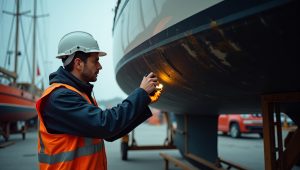
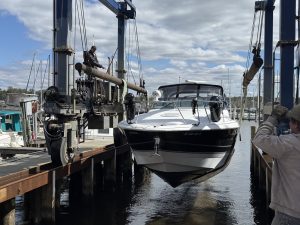
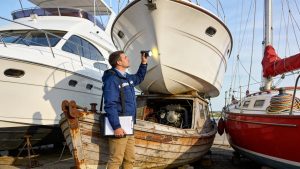
A critical component of any comprehensive used boat survey is the out-of-water inspection, which typically involves a “haul-out” at a boatyard. During this phase, we carefully examine the vessel’s hull and structural integrity.
Our inspection includes:
- Hull Integrity: We visually inspect the entire hull for signs of damage, repairs, stress cracks, and delamination. We use moisture meters to detect hidden water intrusion in cored hulls, which can lead to costly structural degradation.
- Blisters: For fiberglass boats, we identify and assess the presence and severity of osmotic blisters, which can indicate water absorption into the laminate.
- Thru-hulls: All thru-hull fittings and seacocks are inspected for corrosion, proper operation, and secure installation. These vital components prevent water ingress.
- Running Gear: We examine the propeller(s), propeller shaft(s), strut(s), cutlass bearings, and rudder(s) for damage, wear, and proper alignment. Excessive play in these components can indicate expensive repairs.
- Structural Components: Where accessible, we inspect internal structural elements such as stringers, bulkheads, and the transom for signs of stress, rot, or damage.
Onboard Systems and Equipment
Beyond the hull, our survey digs deep into the vessel’s intricate systems, assessing functionality, condition, and compliance with safety standards.
We inspect:
- Electrical Systems: From the batteries and charging systems to the AC and DC panels, wiring, and installed electronics, we check for proper installation, corrosion, and compliance with American Boat & Yacht Council (ABYC) standards. Improper wiring is a common finding and a significant fire hazard.
- Plumbing and Sanitation: Fresh water, black water (holding tank), and grey water systems are inspected for leaks, proper routing, and functionality. We ensure sanitation systems are operational and compliant.
- Fuel Systems: Tanks, lines, filters, and vents are examined for leaks, corrosion, and proper installation. Fuel system issues are a leading cause of marine fires.
- Navigation Electronics: All installed navigation and communication electronics are visually inspected for condition and, where possible, tested for basic functionality.
- Safety Equipment: We verify the presence and condition of federally mandated safety equipment, such as life jackets, flares, fire extinguishers, and sound-producing devices.
Our recommendations often relate directly to these construction standards and safety regulations, ensuring the vessel is safe and compliant.
The Sea Trial: Assessing Performance Underway
The sea trial is an indispensable part of a comprehensive pre-purchase survey. It allows us to assess the vessel’s performance and the functionality of critical systems under actual operating conditions. Typically lasting 30-60 minutes, the sea trial provides insights that simply cannot be gained from a static inspection.
During the sea trial, we evaluate:
- Engine Performance: We observe the main engine(s) and generator(s) under various loads, checking for proper operating temperatures, oil pressure, exhaust characteristics, and unusual noises or vibrations.
- Steering and Handling: We assess the responsiveness and smoothness of the steering system, noting any excessive play or stiffness. The vessel’s handling characteristics are also evaluated.
- Vibration Analysis: We identify any abnormal vibrations that could indicate issues with the propulsion system, such as propeller imbalance or alignment problems.
- System Function: We confirm that other onboard systems, such as navigation electronics, bilge pumps, and trim tabs, operate correctly while underway.
Specialized Inspections: Engine and Rigging
For larger powerboats or vessels with complex propulsion systems, we often recommend a separate, dedicated engine survey performed by a certified marine engine mechanic. While our general survey includes a visual inspection and operational checks during the sea trial, an engine specialist can perform more in-depth diagnostics, compression tests, and oil analysis. This provides a detailed assessment of the engine’s internal health and projected lifespan. For more information, please see our Engine Systems Review.
For sailboats, a separate rigging inspection by a qualified rigger is highly advisable, especially for older or larger vessels. Our survey includes a visual inspection of the mast, boom, and standing/running rigging from deck level. However, a rigger can go aloft to thoroughly inspect all components, including masthead fittings, sheaves, and the condition of the wire or rod rigging, which can be critical for safety.
Finding, Hiring, and Working with a Marine Surveyor
Choosing the right marine surveyor is paramount to a successful used boat survey. Your surveyor acts as your independent expert, providing unbiased information to protect your interests. The process of finding, hiring, and collaborating with your surveyor should be transparent and professional.
How to Find a Qualified Marine Surveyor
The credentials of your marine surveyor matter significantly. We strongly recommend choosing a surveyor who is certified by a recognized professional organization. In North America, the two leading organizations are:
- Society of Professional Marine Surveyors (SAMS): SAMS Surveyor Associate marine surveyors (AMS®) have met rigorous educational and experience requirements, adhere to a strict code of ethics, and participate in ongoing continuing education. You can find a qualified surveyor in your area by visiting the Society of Professional Marine Surveyors (SAMS) website.
- National Association of Marine Surveyors (NAMS): Similarly, NAMS Certified Marine Surveyors (CMS) are highly qualified professionals committed to strict standards.
When searching for a surveyor in North Carolina, whether you’re in Wilmington, New Bern, or Morehead City, prioritize those with experience relevant to the specific type, size, and construction of the vessel you are considering. It’s wise to speak with two or three surveyors to ensure a proper fit and to confirm they are familiar with the local marine environment and common issues found in our area.
The Survey Day: What the Buyer Should Expect
On the day of the used boat survey, you should anticipate a thorough and potentially long process. Depending on the size and complexity of the boat, a survey can take anywhere from a few hours to a full day. The sea trial typically lasts 30-60 minutes.
While your presence is not always required, we highly encourage buyers to attend at least part of the survey, especially the haul-out and sea trial. This allows us to point out findings in person, providing you with a direct understanding of any issues. During the inspection, allow your surveyor to work without interruption. However, ask questions at appropriate times. Your surveyor works exclusively for you, the buyer, and their role is to provide you with an objective assessment, not to negotiate on your behalf.
Understanding the Used Boat Survey Report
Following the completion of the physical inspection, you can expect to receive a detailed, written survey report, typically within 24-48 hours. This report is a comprehensive document that includes:
- Findings and Recommendations: A prioritized list of deficiencies, from minor cosmetic issues to major structural or mechanical concerns, along with recommendations for repair or further investigation.
- Valuation Section: An estimated fair market value and replacement value for the vessel. This is particularly important for your Condition & Valuation Survey Boat Purchase.
- Equipment Inventory: A list of onboard equipment and its general condition.
- Photos: Numerous photographs documenting the vessel’s condition and specific findings.
It’s important to interpret the results with a reasoned perspective. No used boat is perfect; a list of findings is normal. Focus on significant issues that affect safety, structural integrity, or require expensive repairs. These findings provide powerful leverage for negotiation, allowing you to request repairs, a price reduction, or, if necessary, to walk away from the deal. We do not provide repair estimates, but the detail in our reports is designed to facilitate obtaining accurate quotes from repair facilities.
The Financial Implications: Costs and Value of a Survey
Engaging a professional marine surveyor represents an investment, not merely an expense. This upfront cost can save you from far greater financial burdens down the line, ultimately providing significant long-term value and peace of mind. A survey is a critical component of your purchase agreement and a safeguard against unforeseen problems.
Typical Costs of a Marine Survey
The cost of a used boat survey varies based on several factors, including the boat’s length, complexity, age, and location. As a general rule of thumb, plan on spending around $20 to $25 per foot of boat. However, many surveyors have a minimum charge that may exceed this rate for smaller vessels.
Additional charges to anticipate include:
- Haul-out Fees: A short haul at a boatyard for the out-of-water inspection can run another $15 per foot. This cost is paid directly to the boatyard.
- Travel Costs: If the surveyor needs to travel a significant distance, additional fees may apply.
- Specialized Surveys: Engine and sailboat rig surveys, if performed by specialists, generally cost an additional $500-$1000, depending on the number of engines or the complexity of the rig.
While these costs add to your acquisition expenses, they are a small fraction of what you might pay for unexpected major repairs or a vessel that fails to meet insurance or financing requirements.
The Role of a Survey in Boat Insurance and Financing
For most used boat purchases, a current marine survey is not just recommended; it’s often a mandatory requirement.
- Insurance: Insurance companies require a survey to assess the risk associated with insuring the vessel. The report helps underwriters determine the boat’s condition, identify potential claim-leading issues, and ensure it meets safety standards. They may require specific repairs or upgrades before issuing a policy. Some insurers even request periodic surveys every three to five years to monitor the vessel’s ongoing condition.
- Financing: Lenders typically require a survey for used boat financing to determine the vessel’s fair market value. The valuation assessment in the survey helps them establish how much the loan can be for and the required down payment, protecting their investment. For more details on why lenders require surveys, you can read more at Trident Funding.
Without a satisfactory survey, securing financing or insurance for your used boat may prove impossible.
The Seller’s Role: Preparing for a Used Boat Survey
While the survey is primarily for the buyer’s benefit, a seller plays a crucial role in facilitating a smooth and efficient inspection. Proper preparation can present the boat in the best possible light and avoid unnecessary delays or negative impressions.
Sellers should:
- Clean and Declutter: Thoroughly clean the boat, inside and out. Remove all personal items and clutter to ensure all areas, lockers, and bilges are accessible for inspection.
- Maintenance Records: Gather all maintenance logs, service records, and receipts. A comprehensive history of maintenance is highly impressive to a surveyor and indicates responsible ownership.
- Operational Systems: Ensure all systems are operational and ready for testing. Top off fuel and water tanks, ensure batteries are charged, and verify that all lights, pumps, and electronics function. If something is not working, it’s best to fix it beforehand or clearly disclose it.
- Accessibility: Make sure all hatches, engine compartments, and storage areas are open uped and easily accessible.
- Bottom Cleaning: If the boat is being hauled out, ensure the bottom is pressure washed clean to allow for a clear inspection of the hull.
Taking these steps demonstrates care and transparency, which can only benefit the sale process. For useful tips on maintaining your vessel, consider our 5 Essential Maintenance Tips to Prevent Boat Damage.
Conclusion
A professional used boat survey is a non-negotiable part of a prudent boat purchase. It represents an indispensable investment in your safety, financial security, and peace of mind. The value of an unbiased, expert assessment cannot be overstated, as it empowers you to make an informed decision, negotiate effectively, and avoid costly surprises.
At Marine Surveys of North Carolina, our SAMS Surveyor Associate surveyors provide the detailed, unbiased reports serious buyers need to protect their investment. We are dedicated to upholding the highest standards of professionalism and thoroughness, ensuring that every vessel inspected in Wilmington, New Bern, Morehead City, and across our North Carolina waterways receives the meticulous attention it deserves.
We understand that purchasing a boat is a significant decision. Our role is to provide you with the clarity and confidence required to proceed. To schedule your survey or discuss your specific needs, we invite you to visit our main page and review our marine survey process.