Why Understanding Marine Survey Services Matters Before Your Next Vessel Purchase
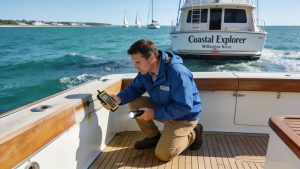
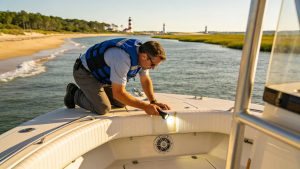
Marine survey services provide independent, professional inspections of vessels to assess their condition, safety, and value. These evaluations are essential for buyers, owners, insurers, and lenders who need accurate, unbiased information before committing to a significant financial decision.
Common Types of Marine Survey Services:
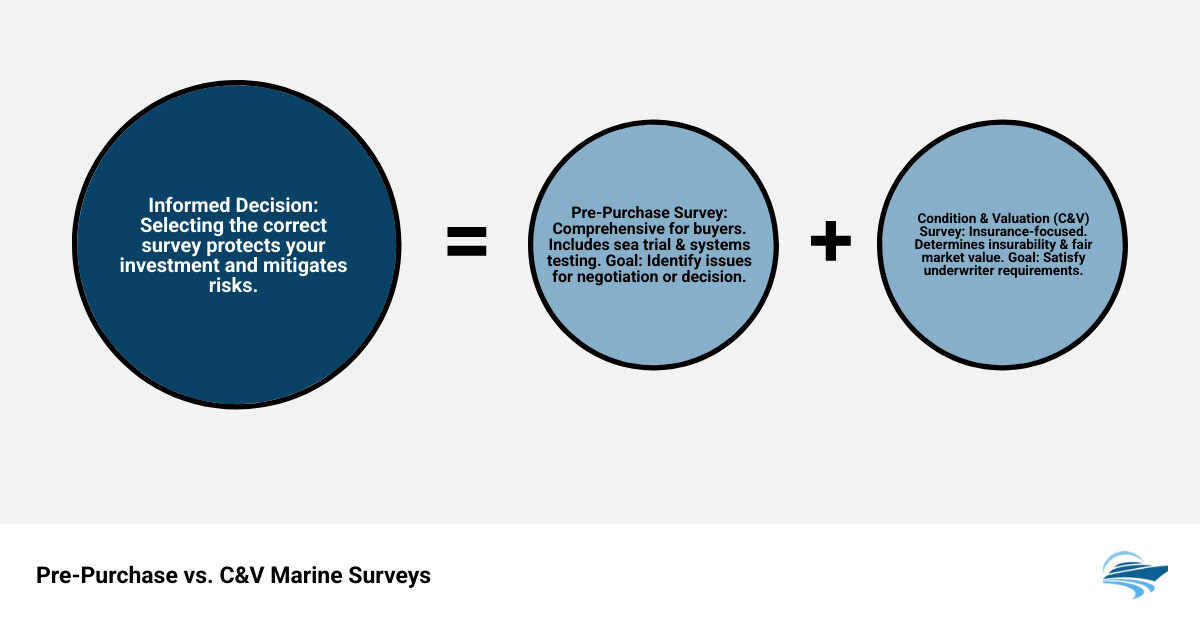
- Pre-Purchase Survey – Comprehensive inspection for buyers before finalizing a sale, including sea trial and systems testing
- Condition & Valuation (C&V) Survey – Insurance-focused assessment that determines insurability, safety compliance, and fair market value
- Damage Survey – Post-incident evaluation to document the extent and cause of damage for claims processing
- Appraisal Survey – Valuation for financing, estate settlements, divorce proceedings, or charitable donations
- Preliminary Survey – Brief walkthrough inspection, often for out-of-town buyers deciding whether a full survey is warranted
Who Uses Marine Survey Services:
- Prospective boat buyers seeking pre-purchase due diligence
- Insurance companies requiring risk assessment and valuation
- Banks and lenders evaluating collateral for financing
- Vessel owners documenting condition for claims or resale
- Attorneys requiring expert evaluation for maritime legal cases
A marine survey is often the last opportunity to identify costly issues before a purchase becomes permanent. The difference between a sound investment and a financial liability often comes down to whether the right type of survey was conducted by a qualified professional. Not all surveys serve the same purpose, and selecting the wrong one can leave critical risks undetected.
I’m Andrew Gallant, a SAMS® Surveyor Associate and principal of Marine Surveys of North Carolina, where I’ve conducted hundreds of independent vessel inspections across the state’s coastal and inland waterways. My certifications from ABYC and formal training in yacht surveying and damage inspection enable me to deliver the thorough, impartial marine survey services that serious buyers, insurers, and brokers depend on for clarity and risk mitigation. I’ll explain the key differences between Pre-Purchase and Condition & Valuation surveys so you can make an informed decision about which service protects your interests.
What is a Marine Survey and Why is it Essential?
A marine survey is a detailed inspection of a vessel conducted by an independent, qualified professional. Its purpose is to assess the condition, value, and safety of the boat, providing a comprehensive report of its findings. This process is crucial for protecting the interests of various stakeholders, including buyers, sellers, insurers, lenders, and legal professionals.
Unlike a hydrographic survey, which measures and describes the physical features of oceans, seas, and waterways, focusing on charting seafloor depths and obstructions for navigation, a marine survey services professional focuses exclusively on the vessel itself. Our inspection examines its structure, systems, and overall seaworthiness. The surveyor’s role is to provide an unbiased, factual account of the vessel’s condition, ensuring all parties have a clear understanding of its true state. This allows for informed decisions, whether it’s for a purchase, an insurance policy, or a legal matter.
The Importance of Impartiality and Credibility
As professional marine surveyors, credibility is paramount. We understand that our findings can have significant financial implications for our clients. Marine surveyors are, by nature of their industry standards, supposed to be impartial and unbiased. Our job is to tell the truth about a boat or yacht, as pleasing or painful as that may be.
To ensure impartiality and credibility, we adhere to a strict code of ethics established by our professional associations. Once you retain us, we work only for you and report to no one else. This commitment ensures that our reports are factual, objective, and serve to protect your interests above all. This unbiased reporting builds trust with all stakeholders involved in a marine transaction, from buyers to insurers, lenders, and even attorneys. For more details on our commitment to impartial service, please review our FAQ.
A Detailed Comparison: Pre-Purchase vs. Condition & Valuation Surveys
The two most common types of surveys serve distinctly different purposes, and choosing the correct one is vital. Understanding their scope and intent is critical for anyone involved in a vessel transaction in North Carolina.
The Pre-Purchase Survey: A Buyer’s Most Critical Tool
The Pre-Purchase Survey is the most comprehensive and detailed inspection we offer. This survey is performed on behalf of a potential buyer before a sale is finalized. It is designed to uncover any existing or potential issues that could affect the vessel’s value, safety, and long-term usability.
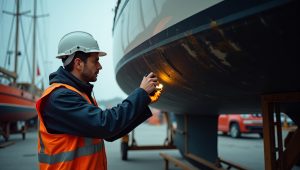
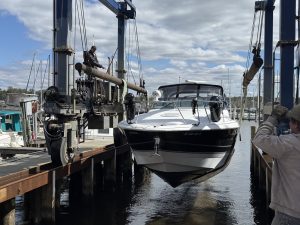
Our Pre-Purchase Survey covers the vessel’s structural integrity, from the hull to the deck, and carefully inspects all accessible onboard systems. This includes the electrical, plumbing, propulsion, fuel, and steering systems, ensuring they are functional and safe. We examine the vessel both in the water and, crucially, hauled out, allowing for a thorough inspection of the bottom, running gear, and underwater components. A sea trial is a standard component of this survey, where we evaluate the engine’s performance under load, observe the vessel’s handling characteristics, and test critical operational systems.
The goal of this exhaustive process is to provide you, the buyer, with a complete understanding of the vessel’s condition. This information gives you the leverage to negotiate the purchase price, request necessary repairs from the seller, or, if significant issues are found, to confidently walk away from the purchase. It is a critical step in protecting your investment. You can learn more about our Pre-Purchase Marine Survey and What Does a Pre-Purchase Boat Survey in North Carolina Include?.
The Condition & Valuation (C&V) Survey: Meeting Underwriter Requirements
Often called an “insurance survey,” the Condition & Valuation (C&V) Survey is primarily required by insurance companies and lenders to determine if a vessel is an acceptable risk for coverage or financing. While still thorough, it is typically less invasive than a Pre-Purchase Survey.
Our C&V Survey focuses on assessing the vessel’s structural integrity, its safety for its intended use, and its compliance with federal regulations and recognized standards (such as ABYC). We identify major hazards and provide a general assessment of the vessel’s overall condition. A key component of this survey is determining the vessel’s fair market value and replacement value. This valuation helps the underwriter establish an appropriate policy and premium, ensuring that the vessel is adequately covered. While a C&V survey identifies significant issues, it is not a substitute for the deep-dive analysis and comprehensive testing performed during a Pre-Purchase Survey. For more information, please visit our Condition & Valuation Survey page.
Other Specialized Marine Survey Services
Beyond the two main types, we offer a range of specialized inspections custom to specific situations:
- Damage Survey: When an unfortunate incident occurs, a Damage Survey is performed to assess the extent and cause of damage to a vessel. This report is crucial for insurance claims, helping to determine repair costs and responsibilities.
- Appraisal Survey: This service determines a vessel’s fair market value for various purposes, including financing, estate settlements, divorce proceedings, or charitable donations.
- Preliminary Survey: Also known as a “walkthrough inspection,” a Preliminary Survey offers a cursory assessment. It’s particularly useful for out-of-town buyers considering a vessel in North Carolina, helping them decide if a full, in-depth inspection is warranted before making a longer trip. This typically involves a visual inspection and verbal report, sometimes with photos.
Beyond these inspections, we also provide consulting services for various maritime industry needs, leveraging our expertise to guide clients through complex vessel-related challenges.
The Professional Standard: What Defines Quality Marine Survey Services
The marine survey industry, much like a seasoned sailor’s wisdom, is largely unregulated. Anyone can claim to be a marine surveyor. This makes it critical for clients to select a surveyor based on their proven credentials, adherence to established standards, and professional affiliations.
The Surveyor’s Credentials: Verifying Qualifications and Impartiality
When seeking marine survey services in North Carolina, it is imperative to look for a surveyor certified by a recognized professional organization. We are proud members of the Society of Professional Marine Surveyors (SAMS®). Another highly respected organization is the National Association of Marine Surveyors (NAMSGlobal). These associations play a vital role in upholding industry standards. They require members to pass rigorous examinations, meet stringent experience requirements, and adhere to a strict code of ethics and continuing education protocols. For instance, NAMSGlobal members are certified based on their knowledge and experience across various categories, including Yachts and Small Craft, Cargo, Marine Warranty, and Hull and Machinery.
Membership in the American Boat and Yacht Council (ABYC) is also crucial. ABYC is the authoritative reference for evaluating issues of design, construction, maintenance, and product performance in the marine industry. Our ABYC certifications demonstrate our commitment to upholding current safety and technical standards, ensuring that our inspections are based on the latest best practices. When choosing your marine surveying professional, look for the NAMS-CMS or SAMS-AMS designations. You can find certified professionals through directories like Find A Marine Surveyor.
The Survey Process: From Initial Contact to Final Report
A professional survey follows a methodical process designed for thoroughness and clarity.
- Initial Consultation: It begins with an initial conversation where we discuss your specific needs and define the scope of the work. This ensures we understand your objectives and can tailor our marine survey services accordingly.
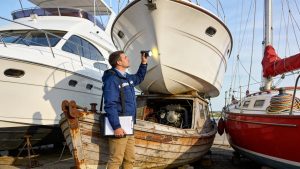
- On-Site Inspection: The vessel is then carefully inspected. This includes both an in-water assessment and, for comprehensive surveys, a haul-out for a thorough examination of the bottom, running gear, and underwater components. We conduct operational testing of all accessible systems, from the engine to electronics, safety equipment, and plumbing.
- Sea Trial: For Pre-Purchase Surveys, a sea trial is performed to evaluate the vessel’s performance under various conditions, test the engine under load, and assess overall handling.
- Documentation: Throughout the inspection, we document all findings with detailed notes and high-resolution photographs. This meticulous record-keeping forms the backbone of your final report.
- Report Delivery: The process culminates in a comprehensive written report delivered to you, typically within a few business days of the inspection.
Deconstructing the Survey Report: What to Expect
The survey report is our final product and your critical tool for making informed decisions. A good survey report should be clear, concise, and relay all the necessary information. It will identify the vessel (including its HIN and documentation numbers), describe its construction and equipment, and provide a detailed assessment of its condition.
Crucially, the report will include a list of findings and recommendations. These recommendations are typically categorized by priority, such as safety-critical items requiring immediate attention, necessary repairs for operational integrity, and maintenance items that should be addressed in due course. The report will also state the vessel’s fair market value and replacement value, supported by market research. This information is invaluable for buyers, insurers, and lenders. Our reports often uncover issues that might not be obvious to the untrained eye. For example, we frequently find hidden issues on the North Carolina coast such as moisture intrusion in core materials, failing engine components, or substandard electrical wiring. To learn more, read about the Top 7 Hidden Issues Found in Pre-Purchase Surveys on NC Coast.
How to Prepare a Vessel for an Efficient and Accurate Survey

The owner’s preparation can significantly impact the survey’s efficiency and thoroughness. A well-prepared vessel allows us to focus on the inspection rather than spending valuable time clearing clutter or waiting for access. This preparation ensures a more accurate assessment, can save you time and money in re-inspection fees, and ultimately helps us protect your interests more effectively.
Key Preparation Steps
- Vessel Cleanliness: Please present the boat in a clean, “ship-shape” condition. A tidy vessel allows for easier access and a more focused inspection.
- Clear Access: Ensure all lockers, cabins, bilges, and engine compartments are free of personal gear, stores, and debris. We need unobstructed access to all systems and structural areas.
- Documentation: Have all vessel documents readily available for our review. This includes registration, title, previous survey reports, and, importantly, recent maintenance records.
- Systems Ready: Make sure all batteries are charged, and all accessible systems (engines, generators, electronics, pumps, etc.) are operational for testing.
- Haul-Out: If a bottom inspection is part of your survey (which it typically is for Pre-Purchase), arrange with the boatyard for the vessel to be hauled out. This allows us to thoroughly inspect the hull, running gear, and underwater fittings.
- Owner’s Responsibility: Any minor dismantling required for access (e.g., removing inspection panels, opening up areas of suspected issues) and subsequent re-installation is the responsibility of the person ordering the survey. We are here to inspect, not to disassemble.
Technology and Evolution in the Marine Surveying Industry
The field of marine survey services has evolved considerably. It has transformed from simple visual checks to a highly technical profession utilizing modern tools and established standards to ensure accuracy and repeatability. This evolution reflects the increasing complexity of modern vessels and the higher expectations of buyers, insurers, and regulators.
Tools of the Trade in Modern Marine Surveying

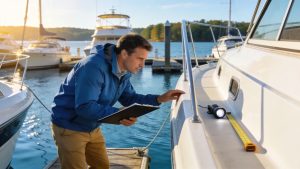
Professional surveyors today employ a variety of non-destructive testing tools to uncover issues not visible to the naked eye. These advanced instruments allow us to provide a deeper, more accurate assessment of a vessel’s condition:
- Moisture Meters: These devices detect moisture intrusion in fiberglass hulls and core materials, indicating potential delamination or structural compromise.
- Thermal Imaging Cameras: We use thermal cameras to identify overheating electrical components, engine hot spots, exhaust leaks, or even areas of moisture within the hull. This technology can reveal hidden problems before they become critical.
- Ultrasonic Thickness Gauges: For metal hulls, these gauges provide precise measurements of plate thickness, helping to assess corrosion levels and structural integrity.
- Borescopes: These flexible optical instruments allow us to inspect internal components of engines, tanks, and inaccessible areas, providing visual evidence of wear, corrosion, or damage.
- Engine Diagnostics: We often use specialized diagnostic software to interface with modern engine control units, retrieving valuable data on engine performance, hours, and fault codes. For a comprehensive look at what we review, see our Engine Systems Review.
These tools complement our visual inspection and extensive experience, enabling us to provide the most thorough and accurate marine survey services possible.
The Evolution of the Marine Surveying Profession
The marine surveying industry has become increasingly professionalized over the last few decades. The establishment of organizations like the Society of Professional Marine Surveyors (SAMS®) in the 1980s marked a significant turning point, setting standards and demanding accountability from its members.
The growing complexity of modern yachts, with their intricate electrical systems, advanced propulsion, and sophisticated navigation equipment, has necessitated a higher level of technical expertise from surveyors. Concurrently, stricter requirements from insurers and lenders have further propelled the demand for standardized, high-quality inspections. Today’s marine surveyor is a highly trained specialist who combines traditional seamanship and intimate knowledge of vessel construction with a deep understanding of marine engineering, regulatory compliance, and non-destructive testing techniques. The industry continues to adapt, driven by the need to support a vast marine transportation system that moves nearly 80 percent of the United States’ overseas trade by weight, including the significant maritime activity here in North Carolina.
Choosing the Right Provider for Your Needs
Selecting the right surveyor is as important as the survey itself. A qualified professional provides not just a report, but peace of mind, allowing you to proceed with confidence in your maritime endeavors. Not every vessel will meet insurance or safety standards, and not every buyer is prepared for what a thorough survey may uncover. Our goal is to provide clarity, regardless of the findings.
Key Considerations When Choosing a Marine Surveying Service Provider
When selecting a provider for marine survey services in North Carolina, prioritize credentials, experience, and professionalism.
- Verify certification: Always confirm that your chosen surveyor is certified by a recognized professional organization such as SAMS® or NAMSGlobal. This ensures they have met rigorous standards for knowledge, experience, and ethical conduct.
- Ask for a Sample Report: A reputable surveyor should be willing to provide a redacted sample report. Reviewing this will give you insight into their work quality, level of detail, and clarity of communication.
- Experience with Your Vessel Type: Ensure the surveyor has specific experience with the type, size, and construction of the vessel you are interested in. A surveyor specializing in small recreational craft may not be adequately equipped for a large motor yacht, and vice-versa.
- Local Knowledge: A surveyor familiar with the specific conditions and typical issues found in North Carolina waters, such as those in Wilmington or Beaufort, can provide invaluable insights.
A serious buyer must be prepared for the thorough scrutiny a professional survey entails, as the findings may reveal uncomfortable but necessary truths about a vessel’s condition. We are here to provide those truths, allowing you to make a decision grounded in reality.
Conclusion
Understanding the difference between a Pre-Purchase and a Condition & Valuation survey is fundamental to protecting your maritime investment. A Pre-Purchase Survey is an exhaustive due-diligence tool for buyers, providing comprehensive insight into a vessel’s true condition. In contrast, a C&V Survey satisfies the risk assessment needs of insurers and lenders, focusing on insurability and valuation.
In either case, the value of a detailed, impartial inspection by a certified professional cannot be overstated. At Marine Surveys of North Carolina, our SAMS® Surveyor Associates provide the methodical, in-depth marine survey services necessary to ensure you can proceed with confidence, whether you’re purchasing a new boat in Morehead City, insuring a yacht in New Bern, or seeking a valuation for a vessel on Lake Norman. We provide the clarity and expertise you need to make informed decisions about your vessel.