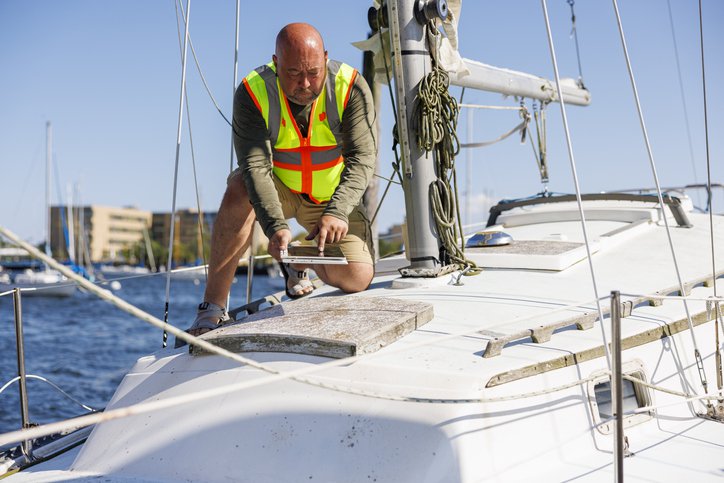
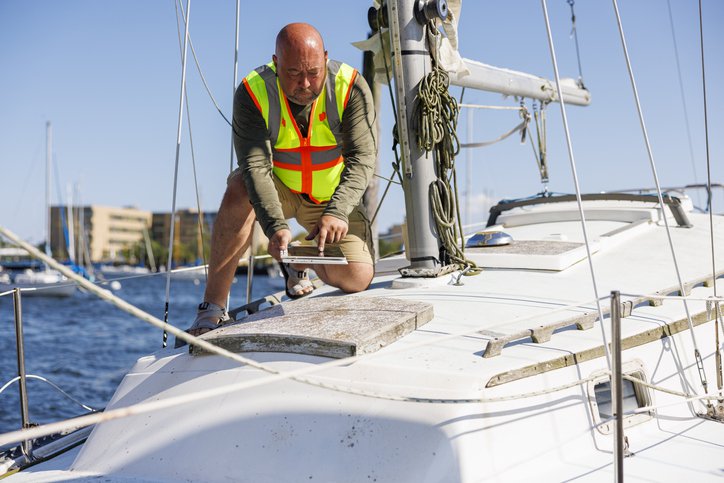
Your insurance company has notified you that your vessel needs an updated Condition and Valuation (C&V) survey for underwriting or renewal. That request usually arrives with a deadline, and the policy decision depends on the quality of the documentation—and on working with an certified marine surveying company that understands insurer expectations.
Marine Survey NC provides insurance-focused, professional boat surveying services as a SAMS® Surveyor Associate, with ABYC Certified Master Advisor credentials and named technical depth including ABYC Marine Electrical and ABYC Marine Systems. In practical terms, that means your insurer receives a clear, objective report (a current marine survey) that documents the vessel’s current condition and risk in a way that supports underwriting decisions—delivered by the kind of marine surveyor pros carriers and owners rely on.
Contact Marine Survey NC at 919.820.9257 or marinesurveync.com/contact to schedule your insurance C&V survey.
What an insurance Condition & Valuation (C&V) survey is
A C&V survey is an insurance-driven inspection that documents:
- The vessel’s current condition
- Safety and risk-relevant deficiencies
- A defensible valuation context (as applicable to the report type), including support for fair market value conclusions where appropriate
It is different from a pre-purchase survey because the audience is different. The insurer is focused on risk: fire, flooding, stability, systems condition, and whether the vessel presents an acceptable underwriting profile—including whether there are needed major repairs, unreported modifications, or other red flags that could affect coverage.
If your need is purchase-related rather than insurance-related, see the pre-purchase marine survey page (often called a standard pre-purchase marine survey)—a common step for used boat buyers evaluating a used boat.
When insurers typically require a boat insurance survey in North Carolina
While every carrier is different, common triggers include:
- Vessel size and value: larger and higher-value vessels (including an certified yacht survey context for higher-end vessels) often require formal documentation.
- Vessel age: older vessels may require updated condition verification and a more detailed risk profile.
- Policy renewal cycles: some insurers request updates periodically to keep a current marine survey on file.
- Coverage changes: moving into different navigation limits, increasing coverage limits, or changing usage.
- Lapses or gaps: a break in coverage can trigger re-underwriting.
If the boat’s operating area includes coastal waters—such as the Cape Fear River, the Intracoastal Waterway, or passages near Beaufort Inlet—insurers often pay closer attention to safety and systems documentation, sometimes tied to insurer-specific regulatory requirements.
For general service context and coverage, start at the Marine Survey NC homepage.
What a C&V survey typically examines
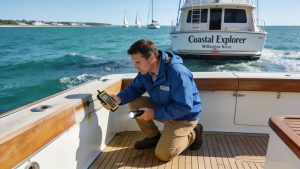
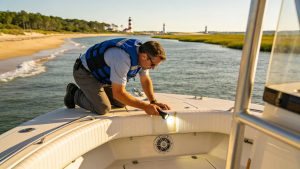
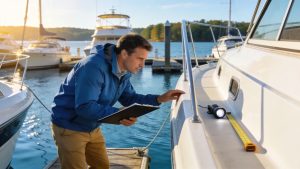
The core of an insurance survey is documentation of condition and risk, based on an expert evaluation by a trained professional and independent professional marine surveyors (often recognized among certified marine surveyors through industry credentials, training, and field experience).
Hull, deck, and structural condition
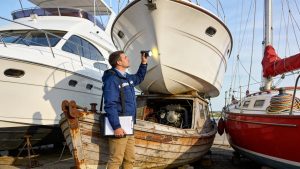
The survey documents observable condition, signs of past repair, and risk-relevant concerns that can affect seaworthiness and safety. When applicable, the report may note evidence of prior impacts and damage surveys history (if known/observable), as well as areas that may warrant specialized inspections.
Through-hulls, seacocks, and flooding risk
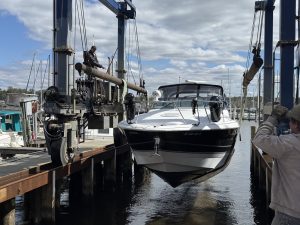
Through-hulls and associated fittings are a primary flooding risk category. Insurers care about condition and installation quality because failures can be catastrophic. Where warranted, recommendations may include haul-outs for confirmation and documentation.
Electrical systems (fire and shock risk)
Electrical deficiencies are frequently safety-critical. A surveyor with ABYC Marine Electrical competency is evaluating observable installation concerns that affect risk and reliability, including wiring practices and basic system protection considerations.
(For background on recreational boat standards and safe practices, see ABYC’s recreational boater resources.)
Machinery and propulsion documentation
Insurance surveys typically document machinery condition and observable concerns that impact safe operation. Some insurers may also request documentation consistent with a marine surveyor sea trial (when feasible/required), depending on the vessel, schedule, and underwriting needs.
If you need additional propulsion documentation, Marine Survey NC can provide an engine systems review.
Safety equipment and onboard safety systems
Insurers often require documentation of safety gear presence and condition. The report should clearly list deficiencies that impact risk.
What the insurer receives in the report
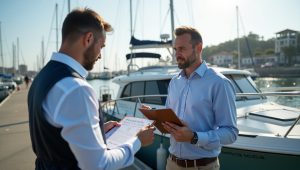
Insurance decisions move on documentation. A C&V report is typically structured, clear, and supported by photos for a straightforward underwriting review.
Expect:
- Vessel identification and inspection context
- System-by-system condition observations
- Photographic documentation
- Safety and risk-relevant deficiency notes
- Valuation context as applicable (C&V format, and where required, related appraisal surveys methodology and support)
- Notes that support underwriting review, including any items likely to trigger follow-up or additional fees (for example, if re-inspection is requested by the carrier)
If you’d like to see formatting and scope examples before scheduling, ask about sample reports.
If you’re unsure what to expect from the process, review Marine Survey NC’s FAQ (a helpful starting point for common marine surveyor FAQs).
Cost and timing considerations
Most owners want two things: clear scope and timely documentation. While every vessel differs, Marine Survey NC’s surveys are structured to produce a report that is usable for underwriting decisions.
If you are early in the process and want an initial condition snapshot before commissioning a full scope, a preliminary survey may be appropriate depending on your insurer’s requirement.
Owners also commonly ask about marine survey cost. Pricing can vary based on vessel type, size, location, access, and whether the insurer requires add-ons (for example, a sea trial, moisture testing, or documentation after repairs). The best approach is to confirm the carrier’s scope requirements first, then schedule accordingly.
North Carolina service areas: lake and coastal documentation
Marine Survey NC serves both lake and coastal markets, including Charlotte metro and the entire Lake Norman region (including Mooresville). If the boat is located near the coast, the following pages provide service-area context:
Closing: get the documentation right before the insurer’s deadline
When an insurer requests a Condition & Valuation survey, the goal is not to “check a box.” The goal is a clear, objective report that documents condition and risk to underwriting standards—built for underwriters to review quickly and confidently.
Contact Marine Survey NC at 919.820.9257 or marinesurveync.com/contact. SAMS® Surveyor Associate — serving Charlotte metro, Lake Norman, and coastal North Carolina, with the professionalism you expect from professional marine surveyors and experienced marine surveyor pros.
Note: For maintenance work (such as mobile boat repair, professional winterization, or spring-readiness services), most owners coordinate with a local marina or yard; surveyors focus on independent inspection and documentation.
External references:
- American Boat & Yacht Council (ABYC) recreational boater resources
- Society of Professional Marine Surveyors (SAMS®) (a leading national association among surveying organizations; some owners may also compare credentials with NAMS)