Most buyers who have been burned by a bad survey understand the difference immediately the second time. The first survey felt like a formality — a few hours at the boat, a clean report, the deal closes. Then six months later the saltwater in the engine room reveals corrosion that a moisture meter would have flagged. Or the insurance adjuster, looking at the damage after a grounding, asks why the transom readings were not documented in the original survey. Or the mechanic pulling the raw water impeller finds the engine compartment bilge is saturated.
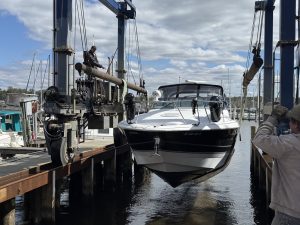
The second survey buyer knows exactly what they are looking for. They ask for the surveyor’s SAMS number and look it up before they call back. They ask specifically about the sea trial. They ask whether a moisture meter will be used and where. They ask about haul-out and what specifically gets inspected below the waterline. They ask these questions because the first survey did not.
Marine Survey NC is the answer to all of those questions.
NC boat buyers choose Marine Survey NC because the survey covers what surveys are supposed to cover — hull, below waterline with moisture meter, electrical, mechanical, sea trial — performed by a SAMS Surveyor Associate professional whose credential is publicly verifiable, whose reports are accepted by lenders and insurers across the state, and whose active practice spans both coastal NC waterways and Charlotte/Lake Norman. The report tells buyers what they need to know before they own the boat, not after.

What NC Waters Actually Do to Boats
The case for a thorough NC survey is not theoretical. It is specific to where these boats have been and what those environments do to fiberglass, aluminum, and aging marine electrical systems.
Cape Fear River and coastal NC: The combination of warm saltwater, tidal estuary conditions, and the particular chemistry of the ICW — full of organic material, runoff, and the cumulative antifouling products from every marina from Norfolk to Florida — is hard on vessels. Osmotic blistering is common on fiberglass hulls from the 1980s and 1990s. The telltale moisture readings show up on the moisture meter before they show up as visible blisters, which means they are catchable on a survey before they become a major repair. Galvanic corrosion on aluminum outdrives and lower units is routine on boats that have sat in saltwater slips. Through-hull fittings on 20-year-old vessels should be examined, not assumed.
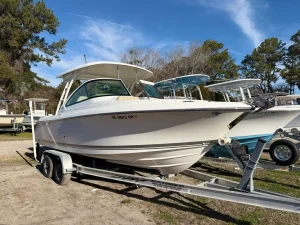
Morehead City and the Newport River waterfront: This is one of NC’s most active sportfishing ports. The boats working out of here — center consoles, sportfishers, large outboard rigs — accumulate hours fast. A 2012 center console with 600 hours looks different from one with 250 hours, and the survey should reflect that difference specifically. Raw water cooling system condition is a critical inspection point on any high-hour coastal NC powerboat.
Beaufort and the Back Sound: A larger sailboat and trawler population here than anywhere else on the NC coast. The Back Sound and Core Sound attract cruisers — boats that have been offshore, that have made coastal passages, and that carry the condition history of those miles. Keel attachment, standing rigging, chainplate condition, and below-waterline survey on a fin-keel cruising sailboat require specific knowledge that not every NC surveyor brings to a fiberglass powerboat market.
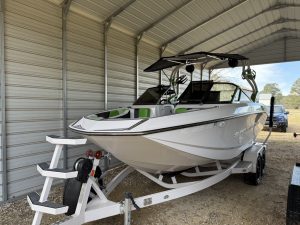
Lake Norman: NC’s largest reservoir is home to a substantial freshwater fleet — pontoons, bowriders, ski boats, tritoons, and some sailboats. These boats age very differently from coastal vessels. Corrosion is much less prevalent. Storage and winterization practices differ. But freshwater does not mean problem-free: electrical system condition on boats that have been through multiple ownership transfers, structural issues on older fiberglass construction, and engine service history that may be incomplete all still matter. The inspection methodology adapts to the freshwater environment, but the scope stays comprehensive.
What SAMS certification Means at the Inspection Level
The SAMS credential matters at the inspection level for a specific reason that goes beyond lender and insurer acceptance: the examination that surveyors must pass to earn the designation is a working test of whether they know what to look for on a vessel.
The SAMS written examination covers hull construction in fiberglass, wood, and aluminum; mechanical systems including engines, fuel, and steering; electrical systems including DC and AC wiring, grounding, and ABYC compliance; safety equipment requirements; and valuation methodology. A surveyor who has passed that examination has demonstrated working knowledge across the full scope of a vessel inspection. A surveyor who has not taken it may have that knowledge — or may have significant blind spots in areas they have less direct experience with.
The code of ethics component is equally relevant. SAMS surveyors agree to represent the interests of the party who hired them — typically the buyer — and to document findings accurately regardless of the effect on the deal. A surveyor who works primarily from broker referrals has an economic incentive to produce reports that do not kill transactions. SAMS certification does not eliminate that pressure, but the code of ethics creates an external accountability standard that non-professional surveyors do not face.
What the Survey Delivers: A Specific Accounting
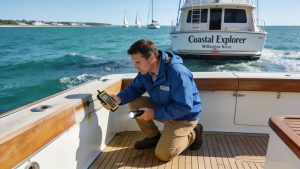
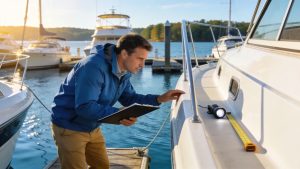
A Marine Survey NC pre-purchase inspection produces a written report that the buyer can use to make a fully informed decision. Specifically:
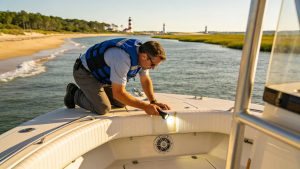
- Hull condition with moisture readings. Specific moisture meter readings at multiple points across the hull — topsides, bottom, transom, deck areas susceptible to core moisture. If readings are elevated, the report documents where, by how much, and what the likely cause is. ‘Hull in generally good condition’ is not a finding. Specific readings at specific locations are findings.
- Structural integrity. Stringer condition, bulkhead attachment, transom integrity, keel attachment (on sailboats), and any structural modifications or repairs — with the surveyor’s assessment of whether those repairs were correctly executed.
- Mechanical system condition. Engine hours confirmed against documentation, cooling system condition, fuel system integrity, steering system, bilge pump operation. With sea trial accompaniment, engine temperature under load, oil pressure, and transmission engagement are documented in operating conditions.
- Electrical system assessment. DC and AC wiring condition, battery system, bilge pump, navigation lights, shore power connections. ABYC compliance issues documented with specific locations.
- Safety equipment inventory and compliance. USCG-required equipment checked and documented with expiration dates. Life raft inspection status on vessels that carry them. Fire extinguisher condition.
- Market valuation. Professional market value opinion based on condition as found, current NC market comparables, and vessel specifications. This number is what your lender uses — it should be defensible, not approximate.
A thorough survey before you close, from a surveyor with a verifiable credential. Request your quote at marinesurveync.com
Specific Situations Marine Survey NC Has Navigated
Without identifying specific clients:
- The clean-looking Wilmington center console: A late-2000s 32-foot center console, professionally detailed, cosmetically excellent. Moisture meter readings on the transom were elevated across 80 percent of the width — consistent with transom delamination behind a gelcoat surface that showed no visual indication. Repair quote from a local yard: $6,400. The buyer renegotiated that amount off the purchase price. The survey cost $875 including haul-out.
- The Lake Norman sailboat with the undisclosed repair: A 1998 30-foot sloop offered at a price consistent with its age and condition documentation. Below-waterline inspection revealed a repaired keel-to-hull joint that had been faired and painted over — the repair was not disclosed and the documentation did not reference it. The original damage and repair history were unknown. The buyer walked away from the deal.
- The Morehead City trawler with the electrical situation: A 2005 trawler with documented annual service history. Survey found non-compliant wiring modifications in the engine room and an AC shore power connection that did not meet current standards. The modifications had clearly been made by a previous owner without professional help. The seller agreed to a credit for a full electrical remediation by a certified marine electrician.
- The insurer’s survey that found the structural issue: An insurer requested a condition survey on a 1994 sailboat changing carriers. Survey revealed chainplate corrosion consistent with water intrusion through inadequate deck-to-chainplate seals — a condition that was progressing toward structural failure. The owner was not aware of the condition. The insurer deferred coverage until repairs were completed. The owner’s attorney later noted that chainplate failure at sea was a legitimate safety risk that the owner had dodged.
How to Book
Contact us through the website. Describe the vessel — type, length, location, and your timing. We confirm availability and provide a complete fee quote before anything is scheduled. Survey fees run $20–$25 per foot of overall length; haul-out is additional at boatyard rates. Travel fees apply outside the primary service areas.
Availability in coastal NC tightens in spring and fall buying seasons. Two to three weeks lead time is the standard recommendation during those windows. Charlotte/Lake Norman scheduling is typically more flexible outside of spring.
If you are closing on a schedule — a purchase agreement with a survey contingency window — tell us the deadline when you contact us. We will confirm whether we can meet it before you commit to the timeline.
What It Feels Like to Close With Confidence
The boat buyers who describe their experience after a thorough survey almost all say the same thing: the survey changed how they felt going into the closing. Not anxious. Not hoping the problems that might be there would somehow not be there. They had read the report. They understood the condition of the boat they were buying. The negotiation was clean because the survey was specific. The closing was straightforward because there were no surprises.
That is what the survey is supposed to deliver. Not a piece of paper that satisfies the lender. Not a formality that has to be gotten through before the deal closes. The survey is the answer to the question every boat buyer is actually asking: is this boat what the seller says it is, and is it worth what they are asking?
Marine Survey NC provides that answer. Then the buyer decides.
Frequently Asked Questions
How soon after the survey do I receive the report?
Report delivery timeline is confirmed when the survey is scheduled. Most pre-purchase survey reports are delivered within 48 to 72 hours of the inspection, depending on the scope and the vessel. If your transaction is on a tight timeline, tell us when you book and we accommodate it where we can.
Can Marine Survey NC survey a boat at a private dock or marina not in the immediate service area?
Yes, subject to availability and travel fees. When you submit the request, include the vessel’s location and we confirm whether coverage applies and what the travel addition will be. We survey throughout the coastal NC region and at Lake Norman — vessels at private docks and marinas throughout both areas are accessible.
What if the seller refuses to allow a haul-out?
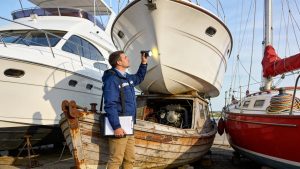
A seller who refuses haul-out is refusing the most important component of a pre-purchase inspection. You cannot complete a thorough below-waterline survey from the dock. If a seller conditions the survey on no haul-out, treat that as a significant red flag and factor it into your purchase decision accordingly. Buyers who skip haul-out to accommodate a reluctant seller own whatever the survey did not find.
I’ve been told the boat was surveyed two years ago. Do I need my own survey?
Yes. A survey from two years ago was performed for a different buyer, with a different purpose, by a surveyor whose obligation ran to that buyer. The vessel’s condition may have changed. The market valuation in that report is almost certainly stale. The previous buyer’s survey is not your protection. Commission your own.
Does Marine Survey NC handle surveys for estate settlements or financing refinancing?
Yes. We provide condition and valuation surveys for purposes beyond pre-purchase — estate settlements, insurance value disputes, refinancing, and vessels being entered into brokerage. The scope is adapted to the specific purpose. Contact us with the details and we confirm whether the service applies.
Buy with confidence. Close without surprises. marinesurveync.com | Coastal NC and Charlotte/Lake Norman | SAMS Surveyor Associate